Is a Flat Roof Right for Your Commercial Building?
Choosing the right roofing system is one of the most important long-term decisions you can make for a commercial property. Your roof protects your building, inventory, equipment, employees, and daily operations. It also affects energy costs, maintenance needs, and how often you will face major repairs.
Flat roofs are extremely common on commercial buildings throughout East Tennessee and across the United States. They offer practical advantages for large structures, but they also require the right materials, proper drainage design, and ongoing inspections to perform well.
So is a flat roof right for your commercial building? The answer depends on your building type, your long-term goals, and how much you value efficiency, accessibility, and predictable maintenance. This guide will walk you through what flat roofs do well, what risks to consider, and how professional installation and maintenance from RC Roofing LLC can help you get the most value from your roof.
What “Flat Roof” Really Means
Most commercial “flat roofs” are not perfectly flat. They are usually low-slope roofs designed with a slight pitch to direct water toward drains, scuppers, or gutters. Even a small slope helps prevent ponding water, which is one of the biggest threats to roof longevity.
Flat and low-slope roofs are commonly found on:
- Retail buildings and strip centers
- Office buildings
- Warehouses and industrial properties
- Restaurants and hospitality facilities
- Schools and municipal buildings
- Medical buildings
- Multi-family buildings and apartment complexes
If your building has a large roof footprint, a flat roof may be the most practical design for construction and performance.
Why Flat Roofs Are So Common on Commercial Buildings
Flat roofs are popular for several reasons that directly benefit commercial property owners and managers.
Efficient Use of Space
A flat roof design makes it easier to build on large footprints and maximize usable interior space. Many commercial structures rely on wide open floor plans, and flat roofs support that design efficiently.
Rooftop Equipment Placement
Commercial buildings often need HVAC units, exhaust systems, and other equipment on the roof. Flat roofs provide a stable platform for:
- HVAC units and curbs
- Restaurant exhaust and ventilation systems
- Solar panels
- Communication equipment
- Skylights and roof hatches
Easier Access for Maintenance
Flat roofs are generally more accessible for inspections, servicing rooftop equipment, and performing repairs. This can improve routine maintenance efficiency and reduce operational disruptions.
Cost-Effective Construction
For many commercial structures, flat roofs can be more cost-effective to build compared to steep-slope roofing systems because they require fewer complex framing components.
The Biggest Concern With Flat Roofs: Drainage
The main tradeoff of a flat roof is drainage. Water moves off steep-slope roofs quickly. On flat roofs, water can sit longer, especially if drains clog or slope is insufficient.
Standing water, often called ponding, can lead to:
- Accelerated membrane aging
- Seam stress and separation over time
- Increased leak risk at penetrations and edges
- Saturated insulation and hidden moisture issues
- Added weight during heavy rain events
A properly designed flat roof addresses drainage from the beginning. This includes:
- Correct slope design
- Proper number and placement of drains or scuppers
- Clear drainage paths
- Routine cleaning and inspections
This is where working with a commercial roofing professional is critical. Proper drainage planning is as important as the roof membrane itself.
If you want an overview of flat roof materials and what performs best, see the best roofing options for flat roofs.
Flat Roof Materials That Work Well for Commercial Buildings
Flat roofs require specialized materials. Shingles are designed for steep-slope shedding and are not appropriate for most flat roof applications. Commercial flat roofs typically use membrane systems that create continuous waterproof surfaces.
TPO Roofing
TPO is one of the most popular commercial flat roof systems because it offers:
- Reflective surface for energy efficiency
- Heat-welded seams for strong waterproofing
- Strong performance in heat and UV exposure
- Good value for many building types
TPO is often chosen for offices, retail centers, and large commercial roofs where energy efficiency and budget are priorities.
PVC Roofing
PVC is also a single-ply membrane, often selected for its enhanced resistance to chemicals and oils.
PVC is a strong choice for:
- Restaurants
- Manufacturing facilities
- Buildings with grease or chemical exposure
- Properties with heavy rooftop activity
PVC offers heat-welded seams and strong long-term performance when installed correctly.
EPDM Roofing
EPDM is a rubber membrane roofing system commonly used on flat roofs. It can perform well, especially on buildings where reflectivity is not a major focus. EPDM seams and detailing require professional attention, and maintenance is important.
The best system depends on your building use, roof design, and long-term goals.
For professional evaluation and installation planning, RC Roofing LLC provides full service support through commercial roofing services in East Tennessee.
Are Flat Roofs Only for Commercial Buildings?
Flat roofs are common on commercial buildings, but some residential properties use flat or low-slope sections for:
- Modern architectural designs
- Additions and bump-outs
- Porches and covered patios
- Garage roofs
If your property has low-slope residential sections, systems like TPO or PVC may be appropriate.
However, this article focuses on commercial buildings, where flat roofs are most prevalent and where performance impacts operations and budgeting.
Benefits of a Flat Roof for Your Commercial Building
A flat roof can be a great choice when it is designed correctly and maintained consistently. Here are key advantages.
Lower Profile and Clean Design
Flat roofs create clean architectural lines and a simple building silhouette, which is common in modern commercial construction.
Easier Inspection and Repairs
Flat roofs are easier to inspect and walk compared to steep-slope systems. This improves:
- Routine inspections
- Leak troubleshooting
- Rooftop equipment maintenance
- Repair accessibility
Better Use of Roof Space
Many businesses use flat roof space for equipment placement and sometimes future upgrades like solar panels. Planning rooftop layout is simpler on flat designs.
Energy Efficiency Potential
Many flat roof membrane systems are highly reflective, helping reduce heat absorption. This can reduce cooling demand and improve comfort in large commercial spaces.
If energy efficiency is a goal, consider reviewing how to improve your roof’s energy efficiency.
Faster Installation on Large Roofs
Flat roofing systems can be installed efficiently on large commercial buildings when handled by an experienced crew, reducing project timelines and downtime.
Challenges to Consider Before Choosing a Flat Roof
Flat roofs are not automatically better. They have specific maintenance and design requirements.
Drainage Requires Ongoing Attention
Even a well-designed flat roof can develop drainage issues if drains clog or debris accumulates. Regular inspections and cleaning are essential.
More Penetrations Increase Risk
Commercial roofs often have many penetrations. Each one is a potential leak point if flashing fails or sealants age.
Foot Traffic Can Cause Damage
Flat roofs experience more foot traffic from HVAC maintenance crews and vendors. Punctures and scuffs are common if walk paths are not protected.
Repairs Must Be Done Correctly
Flat roof repairs require specialized knowledge of membrane systems, seam welding, and compatible materials. Improper repairs can worsen leaks and void warranties.
RC Roofing LLC explains the risks of incorrect DIY roofing work in why DIY roof repairs can cost you more.
Maintenance Requirements for Flat Commercial Roofs
Flat roofs can last a long time, but only if they are maintained properly. Routine maintenance should include:
- Clearing drains and scuppers
- Removing debris from roof surface and valleys
- Inspecting seams and membrane transitions
- Checking flashing at penetrations and edge terminations
- Looking for punctures, blisters, or seam separation
- Checking rooftop equipment curbs and supports
A proactive maintenance approach helps prevent emergency leaks and extends roof service life.
For a complete maintenance strategy, see the ultimate guide to roof maintenance.
How Often Should Commercial Flat Roofs Be Inspected?
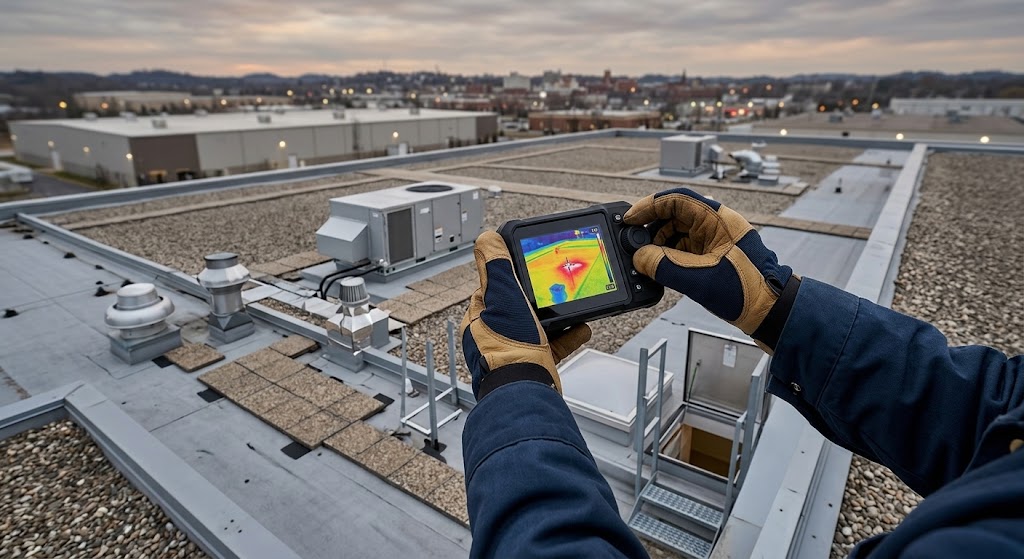
Most commercial roofs benefit from inspections at least twice a year, plus additional checks after severe storms.
A common inspection schedule:
- Spring inspection
- Fall inspection
- Post-storm inspection after major wind or hail events
- Additional checks for heavy foot traffic roofs
Inspections catch small issues early and support warranty requirements.
If you want a deeper explanation of why commercial inspections matter, consider publishing or referencing your article on commercial roof inspections if it exists, or add it to your blog plan.
Signs a Flat Roof May Not Be Performing Well
If you already have a flat roof, there are warning signs that maintenance or repairs are needed.
Look for:
- Ponding water that remains long after rain
- Interior ceiling stains or wet tiles
- Musty odors or humidity issues
- Bubbles or blisters in membrane surface
- Loose edge metal or lifted membrane edges
- Cracks or deterioration around penetrations
- Recurring leaks in the same areas
If you notice these signs, a professional inspection can determine whether repairs are sufficient or replacement planning is needed.
Is a Flat Roof Right for Your Building?
A flat roof is often a strong choice if:
- Your building has a large footprint
- Rooftop equipment is needed
- You want easy inspection access
- Energy efficiency is a priority
- You plan for long-term maintenance
- You work with a contractor who specializes in commercial flat roofs
A flat roof may not be ideal if:
- You want minimal maintenance involvement
- Your building design struggles with drainage or ponding
- You have frequent debris accumulation from nearby trees
- You are in an area where drainage design is difficult to implement
Most of these concerns can be addressed with proper design and maintenance planning. The key is selecting the right system and working with a professional roofer who understands commercial flat roof performance.
Why RC Roofing LLC Is the Best Partner for Commercial Flat Roofs in East TN
A flat roof can be a major long-term asset when installed and maintained correctly. RC Roofing LLC provides commercial roof evaluations, installation, repairs, and maintenance planning across East Tennessee.
With RC Roofing LLC, you get:
- Professional roof inspections and condition reporting
- Experienced installation of TPO, PVC, and other flat roof systems
- Proper drainage planning and detailing
- Reliable repairs that protect warranty requirements
- Ongoing maintenance support to extend roof life
To explore service options, visit commercial roofing services in East Tennessee. To schedule an inspection or estimate, start here: request a commercial roofing quote.
Final Thoughts
So is a flat roof right for your commercial building? In many cases, yes. Flat roofs are common for a reason. They support large building footprints, provide easy access for maintenance, and work well with modern membrane systems like TPO and PVC.
The key to success is choosing the right material, designing proper drainage, and committing to routine inspections and maintenance. When those factors are handled correctly, a flat roof can deliver reliable long-term performance and predictable ownership costs.
If you want expert help evaluating your commercial roof options in East Tennessee, RC Roofing LLC can assess your building and recommend the best path forward.