Snow and Ice Load Considerations for Flat Commercial Roofs in TN
Commercial real estate directors, industrial facility managers, and property owners across Tennessee often view winter weather through the lens of mild southern winters. While states in the upper Midwest or Northeast experience months of sub-zero temperatures and continuous snowpack, Tennessee sits in a volatile transition climate zone. Winter weather across East, Middle, and West Tennessee frequently brings rapid, unpredictable swings between freezing rain, sleet, wet snow accumulations, and sudden temperature thaws.
For low-slope and flat commercial roofing assemblies, this transition climate creates a unique set of structural hazards. Wet snow and solid ice loads in Tennessee are significantly heavier per cubic foot than dry, powdery snow found in northern climates. When unexpected winter storms drop heavy precipitation onto flat commercial surfaces, the resulting weight can strain structural steel purlins, deflect metal decking, block primary drainage pathways, and cause catastrophic structural damage.
Understanding snow and ice weight mechanics, drift accumulation patterns, drainage risks, and structural warning signs is vital for facility managers seeking to protect building occupants, equipment, and capital assets across Tennessee.
1. The Physics of Winter Loads: Fresh Snow vs. Wet Snow vs. Solid Ice
Calculating snow and ice load capacity requires understanding how moisture density transforms structural weight on a low-slope roof surface.
SNOW & ICE DENSITY COMPARISON

Light Powder Snow: 5 to 8 lbs per cubic foot
Packed / Wet Snow: 15 to 25+ lbs per cubic foot
Solid Ice: 57 lbs per cubic foot
Dry Powder vs. Wet Southern Snow
In colder climates where ambient air remains well below freezing, snow falls as dry, fluffy powder. Light powder snow weighs between 5 and 8 pounds per cubic foot. In contrast, winter storms in Tennessee typically occur at ambient temperatures near the freezing mark, between 28 and 34 degrees Fahrenheit.
Snow falling at or near freezing temperatures contains high moisture content, creating heavy, wet snow. Packed wet snow weighs between 15 and 25 pounds or more per cubic foot. A heavy winter storm dumping ten inches of wet snow across a fifty-thousand-square-foot commercial roof adds tens of thousands of pounds of unbudgeted dead weight to the structural building frame.
The Massive Weight Density of Solid Ice
Freezing rain and sleet present an even greater structural threat. Freezing rain coats commercial roof surfaces in solid ice layers. Solid ice weighs approximately 57 pounds per cubic foot.
When a winter storm begins with freezing rain before transitioning to wet snow, a dense, impermeable ice layer forms directly against the waterproofing membrane beneath the snow accumulation. This ice layer seals off internal drain sumps and scupper openings, preventing meltwater from escaping when ambient temperatures briefly rise during the day.
Structural Design Standards and Ground Snow Loads
Structural engineers design commercial building frames according to standards set by the American Society of Civil Engineers, specifically ASCE 7 (Minimum Design Loads and Associated Criteria for Buildings and Other Structures). ASCE 7 dictates minimum ground snow load values based on geographic regions.
In Tennessee, baseline ground snow load design values generally range from 10 to 20 pounds per square foot depending on county location and elevation. While a standard flat commercial roof built to local building codes handles typical light snowfall easily, severe winter storms that combine heavy ice crusts, wet snow, and ponding meltwater can quickly approach or exceed the roof's engineered live load capacity.
2. Snow Drift Accumulation, Parapet Walls, and Structural Vulnerabilities
Snow accumulation on a flat commercial roof is rarely uniform across the roof field. Wind action shifts snow particles continuously, creating concentrated snow drifts behind elevated structural obstructions.
The Aerodynamics of Drift Formation
As winter winds sweep across a large, flat commercial roof, loose snow particles are carried along the surface. When the moving air encounters an elevated vertical barrier, the wind speed drops suddenly on the leeward side of the obstruction. This drop in wind velocity causes the drifting snow to fall out of the airstream and accumulate in dense, deep drifts.
Primary locations for severe snow drift accumulation on commercial roofs include:
- Parapet Walls: High perimeter parapet walls trap windblown snow along the outer edges of the roof field.
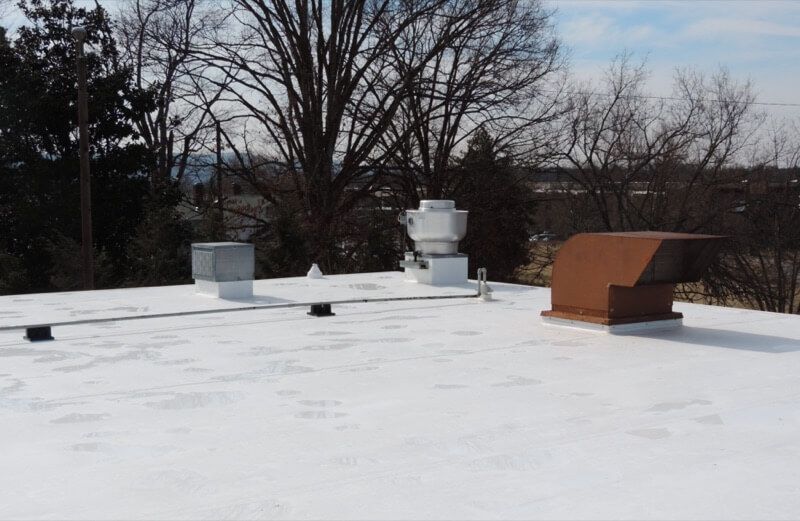
- Rooftop Mechanical Units (RTUs): Large HVAC package units, air handlers, and duct banks act as windbreaks, creating triangular snow drifts that extend several feet outward.
- Building Additions and Step-Down Roofs: Higher roof levels shed windblown snow directly onto lower adjoining roof sections, creating massive localized snow piles.
- Skylights and Penthouse Structures: Elevated elevator shafts, stairwell penthouses, and skylight curbs collect drifted snow along their perimeter bases.
Concentrated Structural Load Imbalances
Snow drifts are far more dangerous than uniform snow coverage. While the central field of a commercial roof may carry only four inches of snow, a drift formed against a parapet wall or higher building section can reach three to five feet in depth.
This concentrated accumulation creates localized weight loads that exceed the localized load capacity of structural steel joists and metal decking. Uneven weight distribution can cause structural deck deflection, open seam gaps in the waterproofing membrane, and crack perimeter counter-flashings.
3. Freeze-Thaw Mechanics, Ice Damming, and Membrane Integrity
The rapid temperature volatility of Tennessee winters subjects commercial waterproofing membranes to constant physical stress.
Freezing Expansion Dynamics
Water is one of the few natural substances that expands as it changes from liquid to solid. When water freezes into ice, its volume expands by approximately 9 percent.
When liquid meltwater gets trapped inside microscopic membrane seam voids, unsealed flashing terminations, or masonry counter-flashing joints, overnight freezing exerts immense mechanical expansion force against those materials. Over multiple freeze-thaw cycles during a single winter, this ice expansion forces small seam gaps open, creating direct channels for water intrusion once the ice thaws.
Ice Damming on Low-Slope Assemblies
While ice damming is commonly associated with steep-slope residential roofs, flat and low-slope commercial roofs experience a different, highly destructive form of ice damming.
During winter days, solar radiation and internal building heat escaping through the roof deck melt the bottom layer of snow resting on the membrane. This meltwater flows downhill along the roof slope toward internal drains, scuppers, or gutter runs. However, because building perimeters and unconditioned scuppers remain colder than the main roof field, the meltwater refreezes as it reaches the cold drainage outlets, forming a solid ice dam.
Once an ice dam seals off a primary drain bowl or perimeter scupper, subsequent meltwater has nowhere to go. Deep ponds of liquid water build up behind the ice dam. Standing water remaining on a flat roof for extended periods accelerates seam degradation, breaks down adhesive glues, and adds thousands of pounds of unbudgeted water weight directly over the structural deck.
Material Behaviors Under Cold Temperatures
Different commercial waterproofing single-ply and asphaltic membranes react differently to freezing temperatures and ice exposure:
- Single-Ply TPO Membranes: Thermoplastic Polyolefin (TPO) sheets maintain excellent thermal stability, but thin membranes can suffer physical punctures if sharp ice chunks are stepped on by service personnel. Facility managers evaluating single-ply performance characteristics can review technical specifications in our guide on TPO single-ply roofing systems.
- PVC Membranes: Polyvinyl Chloride (PVC) membranes feature high chemical resistance and heat-welded seams that resist ice expansion effectively. Asset directors comparing single-ply durability under environmental stress can explore our analysis on EPDM vs PVC roofing pros and cons.
- EPDM Rubber Systems: Synthetic EPDM rubber remains extremely flexible in sub-zero temperatures, resisting thermal shock cracking. However, adhesive-glued lap seams must be probed regularly to ensure ice expansion has not separated the tape seams.
4. Identifying Structural Warning Signs of Excessive Snow and Ice Weight
Facility managers must train operational staff to recognize the physical warning signs that indicate a commercial roof is carrying excessive, dangerous snow or ice loads.
Interior Structural Distress Indicators
Before a physical roof breach occurs, the underlying building frame displays structural stress signals under heavy snow load:
- Sagging Decking and Ceiling Grids: Visible downward bowing or sagging in exposed metal roof decking, ceiling tiles, or structural support purlins.
- Creaking, Popping, or Groaning Noises: Loud structural noises coming from open web steel bar joists, wood trusses, or metal framing members as they deflect under heavy weight.
- Sticking Interior Doors: Interior doors or fire doors on upper floors that suddenly stick, jam, or bind within their door frames due to subtle structural building frame deflection.
- Cracking Wall Finishes: Fresh diagonal cracks appearing in interior drywall, plaster, or masonry concrete block walls near upper roof support columns.
- Sprinkler Pipe Displacement: Fire sprinkler pipes or utility conduits suspended from the roof deck that appear bowed, misaligned, or leaking at fittings.
Exterior Inspection Indicators
Observing the roof exterior from safe ground-level positions or designated access points reveals additional hazard warnings:
- Deep standing ponds of water trapped behind snow drifts or frozen drain sumps.
- Massive icicles forming along perimeter coping caps, indicating blocked drainage pathways.
- Severe snow drift accumulation surrounding rooftop mechanical HVAC units or parapet walls.
If a building displays any combination of interior structural distress signals, facility managers should immediately evacuate the affected building zones and contact a licensed structural engineer and commercial roofing specialist to evaluate load safety.
Building owners evaluating whether an aging roof deck can handle heavy winter loads or requires structural replacement can review technical trade-offs in our detailed analysis on roof overlay vs complete tear off options.
5. Safe Snow Removal and Preventative Winter Maintenance Protocols
Attempting to remove snow and ice from a commercial roof without proper equipment and safety protocols can cause far more physical damage to the waterproofing membrane than the snow itself.
The Dangers of Improper Snow Removal
Unqualified maintenance crews using sharp metal snow shovels, steel ice scrapers, or pickaxes easily puncture frozen single-ply membranes. At freezing temperatures, waterproofing membranes become less pliable. A single sharp strike from a metal shovel can slice through a cold membrane sheet, creating dozens of hidden leak points across the roof field that will drip continuously when the snow thaws.
Best Practices for Safe Snow Removal
When heavy snow or ice accumulation threatens structural weight limits, facility managers should follow strict removal procedures:
- Hire Certified Commercial Specialists: Partner with a professional commercial roofing contractor equipped with OSHA-compliant fall protection gear and snow removal training.
- Use Plastic Shovels and Soft Tools: Utilize heavy-duty plastic or rubber-edged snow shovels. Never use metal blades, sharp scrapers, or mechanical snowblowers on a single-ply membrane.
- Leave a Protective Snow Cushion: Never scrape snow all the way down to the bare membrane surface. Leave a thin 2 to 3-inch layer of snow on top of the membrane sheet to act as a protective cushion against tool impact and foot traffic punctures.
- Clear Drainage Pathways First: Begin snow removal operations around internal drain sumps, scuppers, and gutter troughs. Establishing open drainage paths allows meltwater to exit the roof field naturally as temperatures rise.
- Distribute Removal Work Evenly: Avoid shoveling large piles of snow onto a single section of the roof. Removing snow in balanced passes across the field prevents creating dangerous localized weight imbalances.
Autumn Pre-Winter Maintenance Checklist
The most effective way to protect a flat commercial roof against winter snow and ice loads is completing a thorough preventative maintenance walkthrough before freezing weather arrives:
- Clear Drainage Pathways: Remove leaves, organic silt, and airborne debris from all internal drain bowls, strainers, scuppers, and gutter runs.
- Probe Field Seams: Physically probe single-ply lap seams and wall flashings to repair unsealed gaps before water can enter and freeze.
- Inspect Sealant Beads: Re-seal cracked counter-flashings, pitch pockets, and HVAC curb seals with high-grade commercial polyurethane sealant.
- Verify Secondary Overflow Scuppers: Ensure secondary overflow scuppers are clear and unobstructed to prevent catastrophic water accumulation if primary drains freeze solid.
Commercial facility leaders, asset directors, and institutional property managers in East Tennessee can consult local specialists offering commercial roofing in Knoxville TN to execute baseline pre-winter inspections, clear drainage networks, or schedule winter emergency response services.
Partnering with Commercial Building Envelope Specialists
Managing snow and ice load considerations requires a proactive asset management strategy supported by technical experience, advanced diagnostic tools, and certified field crews.
Establishing a seasonal maintenance routine, completing autumn drainage clearings, conducting post-storm thermal moisture audits, and enforcing safe snow removal protocols allows commercial property owners across Tennessee to protect their physical assets, keep building occupants safe, and avoid costly structural emergency repairs.
If your commercial facility, industrial complex, or real estate portfolio in Tennessee requires a baseline pre-winter inspection, thermal moisture audit, or snow load safety consultation, contact RC Roofing, LLC today to speak with our commercial specialists and get a commercial roofing quote!
Frequently Asked Questions (FAQs)
Below are five of the most frequently asked questions regarding snow and ice load considerations for flat commercial roofs in Tennessee.
How much snow weight can a flat commercial roof support?
A flat commercial roof's snow load capacity depends on local building codes, structural framing design, deck type, and building age. In Tennessee, commercial roof structures are typically engineered to support baseline ground snow loads between 10 and 20 pounds per square foot. While light powder snow poses little risk, wet snow (weighing 15 to 25+ pounds per cubic foot) or solid ice (weighing 57 pounds per cubic foot) can quickly approach maximum structural live load limits during severe winter storms.
What is the difference between wet snow weight and dry snow weight?
Dry powder snow falls in sub-zero temperatures and contains low moisture content, weighing only 5 to 8 pounds per cubic foot. Wet snow occurs near freezing temperatures (28 to 34 degrees Fahrenheit), typical of Tennessee winters. Because wet snow contains liquid water content, it packs tightly and weighs between 15 and 25 or more pounds per cubic foot, placing significantly greater structural strain on commercial roof decks.
Why are snow drifts so dangerous on flat commercial roofs?
Snow drifts are dangerous because they create severe localized weight imbalances across a building frame. As wind carries snow across a flat roof, elevated barriers like parapet walls, HVAC units, or higher building levels drop the wind speed, causing deep snow drifts to accumulate in concentrated zones. While the main roof field may hold only a few inches of snow, a drift can reach several feet in depth, exceeding the local structural load capacity of underlying joists and metal decking.
How do ice dams form on flat commercial roofs and how can they be prevented?
Ice dams form on flat roofs when internal building heat or solar radiation melts the bottom layer of snow on the main roof field. As this meltwater flows toward colder perimeter scuppers or frozen internal drains, it refreezes into a solid ice block. This ice block seals off drainage outlets, trapping large ponds of standing water behind it. Ice dams are prevented by maintaining clear drains, installing self-regulating heat trace cables in drain sumps, and ensuring proper thermal insulation beneath the roof deck.
What is the safest way to remove heavy snow from a commercial roof?
The safest way to remove heavy snow is to hire a certified commercial roofing contractor trained in OSHA fall protection and membrane care. Snow should be removed using heavy-duty plastic or rubber-edged shovels, leaving a 2 to 3-inch cushion of snow on top of the membrane to prevent tool punctures. Crews should clear internal drains and scuppers first to establish runoff pathways and distribute shoveling passes evenly to avoid creating localized weight imbalances.