Understanding Commercial Roofing Permits in Knox and Blount County
A commercial roof replacement or major structural overhaul is one of the most significant investments a business owner, property manager, or real estate asset director will make. When planning a commercial roofing project in East Tennessee, particularly in Knox County and Blount County, navigating the technical and legal requirements of municipal building permits is a vital step. Local building codes exist to ensure structural integrity, occupant safety, energy efficiency, and proper stormwater management.
Failing to acquire the proper commercial roofing permits or misinterpreting local code requirements can lead to severe consequences. Unpermitted projects face costly stop-work orders, heavy daily fines, denied insurance claims, voided manufacturer warranties, and complications during future real estate transactions. Understanding local permitting rules, energy code requirements, and inspection workflows is critical for any commercial property owner in Knoxville, Maryville, Alcoa, Oak Ridge, or surrounding areas.
RC Roofing assists commercial clients through every phase of the permitting and compliance process, handling code reviews, plan submissions, site inspections, and final municipal approvals so property owners can focus on their core business operations.
1. The Critical Role of Municipal Building Permits in Commercial Roofing
Commercial roof assemblies are complex, multi-layered engineered systems. Unlike simple residential shingle repairs, commercial roofing projects often involve massive square footage, heavy structural dead loads, tapered insulation slope modifications, rooftop mechanical equipment curbs, and intricate drainage dynamics. Municipal building permits act as a formal regulatory safety net to confirm that proposed roof modifications meet minimum structural and environmental safety guidelines.
Distinguishing Local Regulatory Jurisdictions
Permitting requirements in East Tennessee depend heavily on the specific municipality and county jurisdiction where the property is located. Knox County and Blount County each maintain distinct codes enforcement departments, and incorporated cities within those counties operate their own independent building inspection divisions:
- City of Knoxville: Commercial projects located within Knoxville city limits fall under the jurisdiction of the City of Knoxville Plans Review and Inspections Department.
- Unincorporated Knox County: Commercial facilities situated outside city limits are governed by the Knox County Department of Building Operations.
- City of Maryville and City of Alcoa: Both incorporated cities within Blount County maintain dedicated building safety divisions with specific local code amendments.
- Unincorporated Blount County: Commercial properties outside incorporated city boundaries fall under the authority of the Blount County Building Inspections Department.
Because each local department enforces specific building code cycles and local amendments, working with a commercial contractor familiar with local municipal inspectors ensures a smooth submission process.
2. When Is a Commercial Roofing Permit Required in Knox and Blount Counties?
Determining whether your upcoming commercial roofing project requires a permit depends on the project scope, structural impact, and thermal insulation alterations.
Complete Tear-Offs and Major Replacements
A commercial building permit is mandatory across both Knox and Blount counties whenever a project involves a complete tear-off down to the structural deck. When existing membrane layers, wet insulation, and flashings are stripped away, building officials require plan reviews to verify that the structural deck metal, poured concrete, or wood planking is sound, that thermal insulation meets minimum energy codes, and that edge attachment details comply with local wind uplift standards.
Roof Overlays and Recovery Systems
Building codes generally allow low-slope commercial roofs to carry up to two waterproofing layers. If a commercial building currently has only one existing roof layer that is structurally sound and dry, code allows the installation of a new overlay system over the existing assembly.
However, even overlay projects usually require a permit and inspection approval to verify that the existing roof structure can handle the added dead weight and that the existing substrate contains no hidden moisture saturation. Property managers evaluating whether a facility qualifies for an overlay can review technical comparisons in our guide on roof overlay vs complete tear off options.
Structural Modifications and Equipment Curbs
Any roofing project that involves structural deck repair, joist reinforcement, altering secondary overflow drainage scuppers, or adding new rooftop HVAC unit curbs requires a formal commercial building permit. Municipal plan reviewers must inspect structural engineering calculations to confirm that the roof deck can support concentrated mechanical loads.
Routine Maintenance Exemptions
Minor, localized repairs generally do not require a commercial building permit. Patching a small puncture in a single-ply membrane, clearing blocked internal roof drains, re-caulking counter-flashings, or performing routine preventative maintenance are classified as ordinary repair work under the International Building Code (IBC) and can proceed without municipal permit filing.
3. Building Codes, Energy Standards, and Technical Compliance in East TN
Commercial building codes are updated regularly to incorporate advancements in material engineering, energy efficiency, and structural safety. Both Knox County and Blount County base their commercial building regulations on standard model codes, modified by state and regional amendments.
The International Building Code (IBC)
The International Building Code sets core safety standards for commercial roof construction. Key compliance areas include:
- Fire Classification: Commercial roof assemblies must meet specified fire resistance ratings (Class A, B, or C) based on building occupancy, construction type, and proximity to adjacent structures.
- Wind Uplift Resistance: Roof perimeter coping caps, edge metal flashing, and field membrane attachment must meet strict wind uplift standards, such as ANSI/SPRI ES-1, to withstand high wind gusts common along the Appalachian ridge.
- Drainage Capacity: Roof fields must feature adequate slope to prevent ponding water, defined by the IBC as water that remains on a roof surface 48 hours after precipitation. Primary internal drains and secondary emergency overflow scuppers must be sized to handle regional rainfall intensity.
The International Energy Conservation Code (IECC)
Energy conservation requirements represent one of the most critical parts of modern commercial roofing permits. When a commercial roof is completely replaced, local building codes require the insulation assembly to meet minimum thermal resistance standards established by the adopted IECC.
In Knox and Blount counties, commercial roof replacements must meet specified minimum thermal insulation values, typically requiring R-25, R-30, or higher depending on the adopted code cycle. Achieving these R-values requires installing continuous polyisocyanurate insulation boards in at least two staggered layers to prevent thermal bridging across joints.
Material Selection and Reflectivity
Selecting high-performance waterproofing membranes helps building owners meet energy codes while optimizing long-term lifecycle costs. For example, installing bright white single-ply membranes reflects solar heat, lowering cooling loads on rooftop mechanical equipment.
Facility owners evaluating single-ply performance standards can review detailed specs in our guide on TPO single-ply roofing systems.
For commercial facilities exposed to rooftop grease, chemical exhaust, or extreme thermal movement, choosing the correct polymer chemical composition is equally critical. Asset directors comparing material durability can explore our detailed breakdown on EPDM vs PVC roofing pros and cons.
4. Step-by-Step Commercial Permitting and Inspection Workflow
Navigating the commercial permitting process in Knox and Blount counties follows a structured multi-step sequence. Skipping steps or commencing construction prior to permit issuance can trigger immediate municipal shut-down orders.
Step 1: Pre-Project Audit and Site Inspection
Before drafting permit documents, a thorough site assessment is performed. Technicians inspect the roof deck, measure structural parapet heights, evaluate core samples to check existing insulation thickness, and assess existing drainage points.
Step 2: Document Preparation and Architectural Drawing Compilation
The commercial contractor prepares a comprehensive permit application packet. Depending on project size and structural complexity, this documentation includes:
- Detailed scope of work outlining tear-off methods and assembly layers.
- Architectural roof layout plan showing square footage, expansion joints, and drain locations.
- Manufacturer specification sheets for insulation, adhesives, and single-ply membranes.
- Tapered insulation shop drawings showing slope directions and R-value calculations.
- Structural engineering calculations if heavy rooftop units or deck alterations are involved.
Step 3: Application Submission and Plan Review
The completed permit packet is submitted to the appropriate municipal building office, such as the City of Knoxville Plans Review and Inspections Department or Blount County Building Inspections. Plan reviewers analyze the documents to verify compliance with fire ratings, energy codes, wind uplift standards, and accessibility requirements. Once approved, the commercial building permit is issued, and physical work may begin.
Step 4: Mandatory On-Site Municipal Inspections
Throughout construction, local building inspectors conduct on-site physical inspections to verify that actual field work matches the approved plans:
- Deck Inspection: Conducted after the old roof is torn off to confirm that the underlying metal, wood, or concrete deck is structurally sound and free of rust or rot before new insulation is installed.
- In-Progress Insulation and Attachment Inspection: Verifies that insulation board thickness meets code R-values, joints are properly staggered, and mechanical fasteners or adhesives match approved wind uplift patterns.
- Final Inspection: Conducted after all membrane seams are welded, flashing details completed, edge metal installed, and site debris cleared. The inspector verifies overall code compliance and signs off on the permit.
Step 5: Permit Closure and Certificate of Completion
Once the final inspection is passed, the municipal building department officially closes the permit and issues a Certificate of Completion. This document serves as permanent legal proof that the commercial roof installation meets all regional building codes.
5. How RC Roofing Manages the Entire Permitting Process for You
For commercial building owners, managing code reviews, drafting technical plans, interacting with municipal inspectors, and scheduling multi-stage inspections can be overwhelming and time-consuming. RC Roofing takes complete responsibility for the permitting process, offering turnkey project management that eliminates stress and ensures absolute code compliance.
Turnkey Permitting and Regulatory Management
When you partner with RC Roofing for a commercial roofing project in Knox County or Blount County, our experienced team manages every administrative and regulatory requirement:
- Code Verification: We review local municipal building codes, energy standards, and local amendments specific to your property's exact jurisdiction.
- Plan Preparation: Our technical team compiles comprehensive project documentation, manufacturer specifications, tapered insulation layouts, and engineering reports required for plan review.
- Direct Filing: We submit all application files directly to Knox County, City of Knoxville, Blount County, City of Maryville, or City of Alcoa building departments.
- Inspector Coordination: We schedule and host all mandatory on-site municipal inspections, meeting inspectors on the roof field to answer technical questions and demonstrate code compliance.
- Permit Closure: We secure all final sign-offs and Certificates of Completion, providing you with full documentation for your permanent property management records.
By managing every permitting detail, RC Roofing protects commercial property owners from regulatory delays, unexpected fines, and compliance errors. Building managers and corporate asset directors can learn more about our regional installation capabilities by visiting our page on commercial roofing in Knoxville TN.
6. Risks of Unpermitted Commercial Roofing Work
Some property owners or unlicensed contractors attempt to skip the permitting process to save time or lower upfront project bids. However, executing an unpermitted commercial roofing project creates severe legal, financial, and operational liabilities.
Stop-Work Orders and Municipal Fines
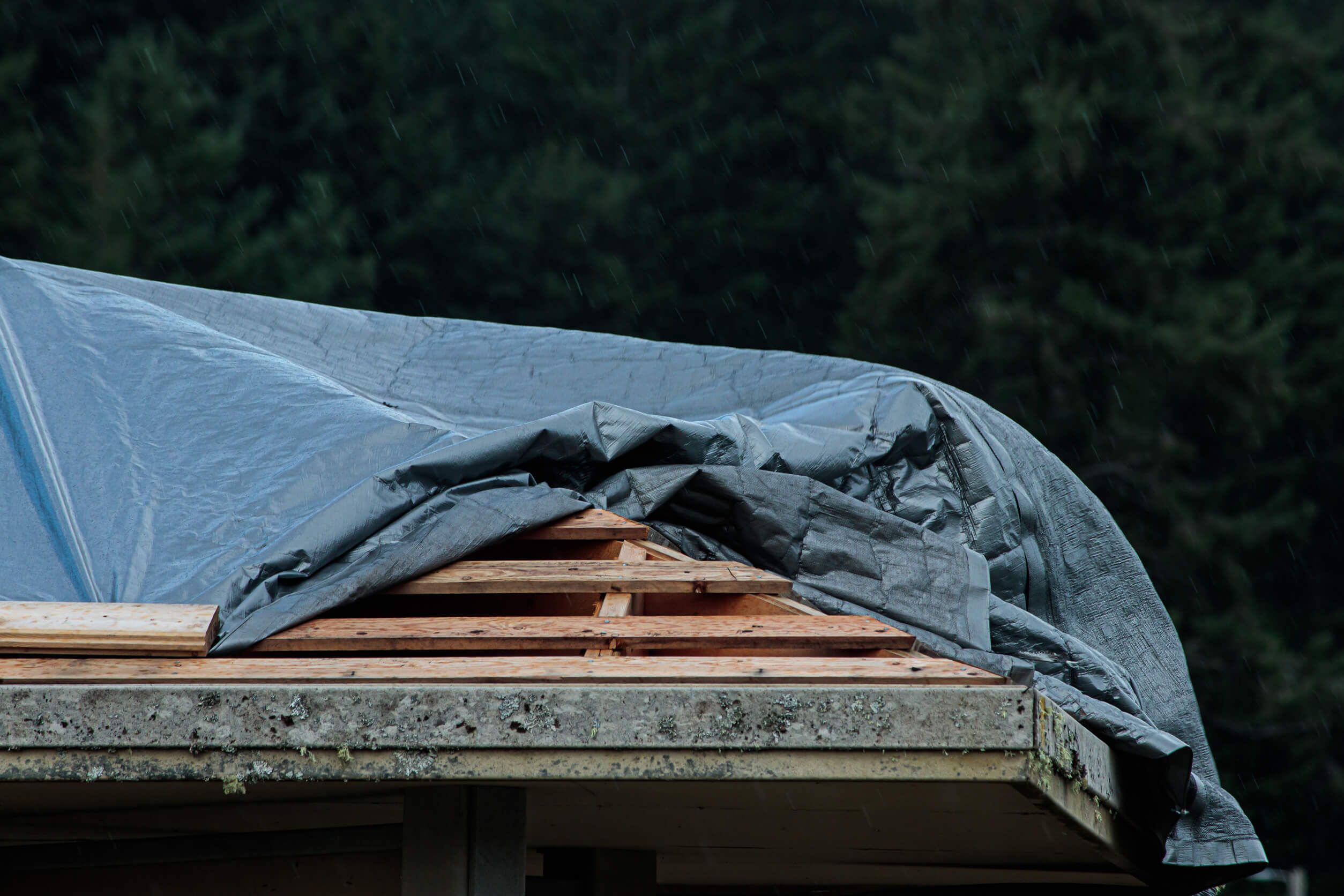
City and county building inspectors monitor commercial zones daily. If an unpermitted commercial roof tear-off is discovered, inspectors will issue an immediate stop-work order. All construction halts instantly, leaving an exposed or partially torn-off roof vulnerable to rain damage while waiting for retroactive plan reviews and permit approvals. Municipalities also levy significant financial penalties for unpermitted work.
Voided Manufacturer Warranties
Major commercial roofing material manufacturers require proof of all mandatory municipal permits and building code compliance before issuing a long-term No-Dollar-Limit (NDL) warranty. If a roof replacement is completed without proper permits or fails to meet local energy and wind codes, the manufacturer may refuse to issue warranty coverage, leaving the building owner financially exposed if leaks occur later.
Insurance Claim Denials
If a storm, wind event, or building fire damages an unpermitted commercial roof, the property insurance carrier may audit building department records during the claim investigation. If the carrier discovers that the roof was installed or modified without required permits and code inspections, they may deny the insurance claim, citing unapproved construction.
Title and Real Estate Transaction Obstacles
When selling or refinancing a commercial property, buyers and lenders conduct extensive due diligence, including verifying building permit histories. Unpermitted commercial roof replacements create major red flags during title searches, often forcing sellers to pay for retroactive inspections, structural engineering certifications, or complete roof repairs before a transaction can close.
Commercial property owners and facility directors preparing for an upcoming building envelope upgrade can contact our team to get a commercial roofing quote and receive a comprehensive code compliance review.
Frequently Asked Questions (FAQs)
Below are five of the most frequently asked questions regarding commercial roofing permits in Knox County and Blount County.
Do you need a permit to replace a commercial roof in Knox County or Blount County?
Yes, a commercial building permit is mandatory in both Knox County and Blount County for complete roof replacements, structural deck repairs, overlay installations, and projects involving insulation modifications. Permits ensure that the proposed assembly complies with the International Building Code (IBC) and International Energy Conservation Code (IECC). Minor localized repairs generally do not require a permit.
Who is responsible for pulling the commercial roofing permit, the property owner or the contractor?
While the legal responsibility for building code compliance rests with the property owner, a licensed commercial roofing contractor typically pulls the permit on the owner's behalf. In Tennessee, licensed contractors holding the appropriate license classification file the permit application, submit technical drawings, and schedule required municipal inspections. RC Roofing handles this complete process for our commercial clients.
How long does it take to get a commercial roofing permit approved in Knoxville or Maryville?
Permit approval timelines vary depending on project complexity and the specific municipal building department. Standard low-slope commercial roof replacements with straightforward scopes usually receive plan review approval within 5 to 10 business days. Projects requiring complex structural engineering calculations or zoning variances may take longer. RC Roofing submits comprehensive permit packets early to prevent construction scheduling delays.
What insulation R-value is required for commercial roofs in East Tennessee?
Under current energy codes adopted across Knox and Blount counties, commercial roof replacements over conditioned spaces must meet minimum continuous insulation standards, typically requiring R-25 to R-30 or higher depending on the specific code cycle enforced by the local jurisdiction. Meeting this requirement usually involves installing multiple layers of continuous polyisocyanurate insulation with staggered joints.
What happens if a commercial roof is installed without a permit?
Installing a commercial roof without a permit can result in immediate municipal stop-work orders, substantial daily fines, and requirement to tear off newly installed materials if work fails to meet code. Unpermitted work can also void manufacturer No-Dollar-Limit (NDL) warranties, cause property insurance claim denials, and create significant legal obstacles during future property sales or refinancing transactions.
Complete Peace of Mind for Your Commercial Roof Project
Navigating commercial roofing codes and permitting regulations in Knox and Blount counties does not have to be a complicated or stressful experience. Understanding local requirements, adhering to energy code standards, and working with experienced professionals ensures your capital investment is fully protected.
By partnering with RC Roofing, you gain a dedicated commercial roofing specialist who manages every technical detail, from initial site audits and architectural plan filings to on-site municipal inspections and final permit sign-offs.
If your commercial facility, retail space, or industrial building in East Tennessee requires a roof inspection, replacement, or code compliance review, contact RC Roofing, LLC today to speak with our commercial team!