What Building Owners Should Know About Commercial Roofing in Cleveland, TN
Cleveland, Tennessee, serves as a vital manufacturing, logistics, and commercial hub in Southeast Tennessee. Situated within Bradley County along the Interstate 75 corridor between Chattanooga and Knoxville, Cleveland is home to major industrial complexes, high-volume distribution centers, corporate headquarters, healthcare facilities, educational institutions, and sprawling retail developments.
Managing commercial real estate in Cleveland requires a thorough understanding of how local climate conditions, facility usage, structural design, and municipal building codes impact long-term building envelope performance. A commercial roof is a major capital asset that shields inventory, machinery, workers, and business operations from the elements. When a commercial roof fails, water intrusion can cause immediate equipment damage, operational downtime, tenant disputes, and severe financial loss.
Building owners, real estate asset managers, and facility directors operating in Cleveland must navigate specific environmental and technical factors to ensure their roofs remain watertight, energy-efficient, and fully compliant with state and municipal regulations.
1. The Commercial Real Estate Landscape in Cleveland, TN
Cleveland features a diverse commercial building footprint. Understanding how a facility is used is the first step in selecting the right commercial roofing system.
Industrial and Manufacturing Facilities
Cleveland has a dense manufacturing presence, hosting major global and regional production facilities. Manufacturing plants generate unique internal environmental conditions, including high operational heat, steam emission, chemical exhaust, and airborne oils or greases.
For these facilities, standard roofing membranes can break down rapidly if they are not engineered to resist chemical exposure. Industrial roof design in Cleveland must prioritize chemical resistance, heavy-duty flashing around exhaust vents, and robust structural deck support.
Warehousing and Logistics Hubs
Positioned along major transportation arteries, Cleveland contains extensive distribution facilities and logistics warehouses. These large-footprint, low-slope facilities require cost-effective, high-reflectivity waterproofing systems that cover thousands of square feet efficiently while resisting wind uplift and localized ponding water.
Retail Centers and Commercial Office Parks
Commercial properties along high-traffic corridors such as Paul Huff Parkway, Keith Street, and Treasury Drive host multi-tenant retail strip centers, professional office buildings, and dining establishments. These properties feature numerous rooftop mechanical units (RTUs), skylights, and frequent service foot traffic, requiring dedicated walkway protection pads and reinforced flashing details.
Historic Downtown Commercial Properties
Downtown Cleveland features historic brick structures, civic buildings, and traditional storefronts. Roofing work on older downtown properties requires specialized knowledge of load-bearing masonry walls, historic parapets, and tight urban staging access where heavy equipment footprint is constrained.
2. Environmental Stressors Facing Cleveland Commercial Roofs
Commercial roofs in Southeast Tennessee are subjected to demanding environmental forces throughout the year. The regional climate requires building envelope materials capable of withstanding moisture, thermal shock, and severe storm events.
SOUTHEAST TENNESSEE ENVIRONMENTAL ROOFTOP STRESSORS

Spring: Convective thunderstorms, hail impacts & high wind uplift.
Summer: Extreme solar radiation, high humidity & thermal shock.
Autumn: Heavy leaf litter clogging internal drain sumps & scuppers.
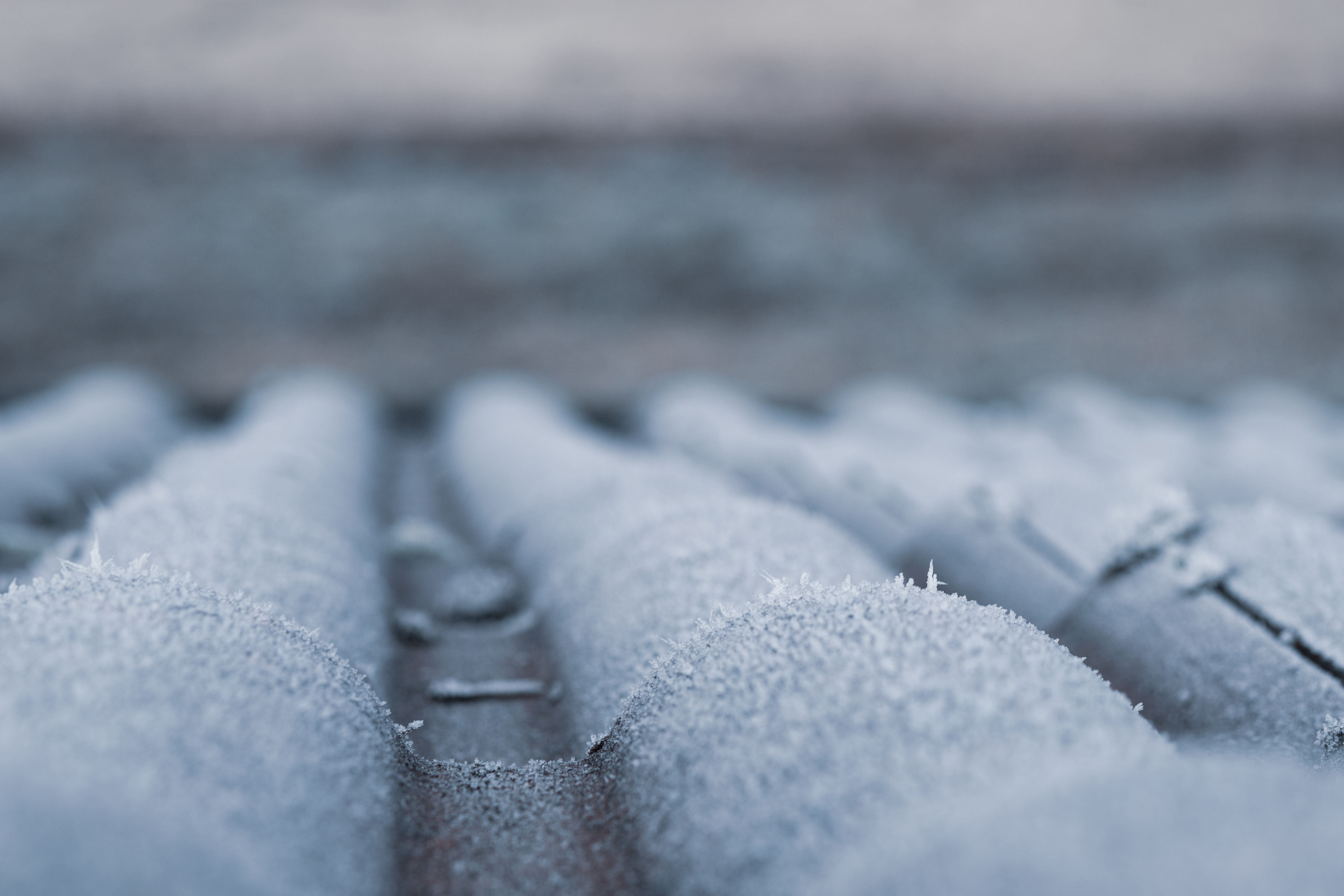
Winter: Freeze-thaw cycles expanding trapped moisture in seam voids.
High Annual Rainfall and Biological Growth
Cleveland receives over 50 inches of rainfall per year, well above the national average. Low-slope commercial roofs rely on continuous drainage pathways to shed water quickly.
When airborne silt, tree leaves, or debris block internal drain bowls or scupper outlets, standing water forms. Water remaining on a flat roof for longer than 48 hours accelerates membrane degradation, weakens adhesive seams, and adds thousands of pounds of unbudgeted dead weight to the structural deck.
Furthermore, high summer humidity creates an ideal environment for algae, moss, and fungal growth, which can break down organic roofing felts and create slip hazards for maintenance technicians.
Intense Thermal Cycling and Solar UV Exposure
During hot summer months, surface temperatures on dark commercial roof membranes can reach extreme levels under direct solar radiation. Late afternoon thunderstorms often bring cold rain that drops rooftop surface temperatures rapidly in minutes.
This dramatic shift causes rapid thermal contraction, a phenomenon known as thermal shock. Over time, repeated thermal shock places immense mechanical stress on field seams, perimeter flashings, and mechanical fasteners, causing unsealed gaps to open if materials are not properly maintained.
Severe Storms and Wind Uplift
Situated in the Ridge-and-Valley province near the Appalachian foothills, Cleveland frequently experiences severe spring convective storms, microburst winds, and occasional hail events. High winds flowing over building perimeters create powerful negative suction forces known as wind uplift.
If perimeter edge metal, coping caps, or field attachment patterns are weak or deteriorated, wind uplift can catch the membrane edge and peel large sections away from the structural deck.
3. Primary Commercial Roofing Systems Evaluated by Cleveland Building Owners
Selecting the right commercial waterproofing membrane depends on facility usage, roof slope, chemical exposure, energy goals, and long-term capital plans.
TPO (Thermoplastic Polyolefin) Systems
TPO has become one of the most widely specified single-ply roofing membranes for commercial and industrial buildings in Cleveland. TPO features heat-welded seams that fuse individual membrane rolls into a single, monolithic waterproofing sheet.
Key benefits of TPO include:
- High Solar Reflectance: Bright white TPO reflects up to 80 percent of solar radiation, reducing heat transfer into the building and lowering summer cooling costs for large facilities.
- Strong Heat-Welded Seams: Hot-air welded seams provide physical lap strength that exceeds the tear strength of the membrane itself.
- Cost-Effective Coverage: Delivers an excellent balance of energy efficiency, performance, and upfront value for large warehouse and retail footprints.
Building owners interested in single-ply material standards can explore detailed specifications on our dedicated page for TPO thermoplastic polyolefin roofing systems.
PVC (Polyvinyl Chloride) Systems
PVC is a high-performance single-ply membrane engineered for demanding commercial environments. While visually similar to TPO, PVC features a distinct chemical formulation that provides superior resistance to animal fats, greases, industrial chemicals, and jet fuels.
PVC is the ideal choice for Cleveland manufacturing plants, commercial kitchens, food processing facilities, and buildings with heavy rooftop exhaust equipment. Property managers evaluating plastic versus rubber membrane performance can review technical comparisons in our detailed guide on EPDM vs PVC roofing pros and cons.
EPDM (Ethylene Propylene Diene Monomer) Rubber Systems
EPDM is a synthetic rubber membrane known for its extreme elasticity, cold-weather flexibility, and high resistance to impact damage from hail and fallen tree branches. EPDM performs exceptionally well in climates with significant thermal expansion and contraction cycles.
Standing Seam Metal Roofing
Commercial standing seam metal roofs feature raised interlocking seams that elevate mechanical fasteners above the water line. Metal roofs offer an operational service life of 40 to 60 years or more, making them a popular choice for municipal buildings, educational campuses, and corporate headquarters seeking long-term durability.
4. Key Structural Decision: Complete Tear-Off vs. Recover Overlay
When a commercial roof reaches the end of its operational service life, building owners face a primary capital choice: tearing off the existing roof down to the bare deck or installing a recovery overlay.
Understanding the Recover Overlay Option
A roof overlay involves cleaning the existing roof surface, repairing localized defects, installing a rigid cover board or thin insulation layer over the old roof, and applying a new waterproofing membrane sheet.
Overlays reduce upfront capital costs because they eliminate full demolition labor and disposal fees. However, building codes limit commercial roofs to a maximum of two waterproofing layers. If a building already has two existing roof layers, a complete tear-off is legally mandatory.
When a Complete Tear-Off Is Required
Installing a new roof over a wet, saturated substrate is one of the most expensive mistakes a property owner can make. If moisture has entered the underlying insulation through old leaks, trapping that water beneath a new overlay will cause the structural steel deck to rust, wood decking to rot, and the new membrane to fail prematurely.
Before making a reroofing decision, property managers should commission a professional moisture survey, including non-destructive infrared thermal scanning and core cuts, to verify whether the underlying insulation is completely dry.
Facility directors evaluating structural trade-offs between system replacement models can read our technical breakdown on roof overlay vs complete tear off options.
5. Local Permitting, Building Codes, and Maintenance in Bradley County
Commercial roofing projects in Cleveland must comply with regional building codes and municipal permitting procedures to ensure structural safety and energy efficiency.
Municipal Code Enforcement
Commercial construction and reroofing projects within city limits fall under the jurisdiction of the City of Cleveland Building Inspections Department, while projects in unincorporated areas are governed by Bradley County Building Codes enforcement.
Key compliance requirements include:
- Energy Code R-Values: Complete roof replacements over conditioned spaces must meet continuous insulation requirements specified by the adopted International Energy Conservation Code (IECC), typically requiring R-25, R-30, or higher.
- Wind Uplift Standards: Perimeter edge metal, coping caps, and field attachment patterns must comply with ANSI/SPRI ES-1 wind uplift testing standards to withstand severe regional windstorms.
- Structural Deck Inspections: Municipal building inspectors must inspect the structural deck during tear-off operations to confirm that metal, concrete, or wood substrates are structurally sound before new insulation is fastened.
The Financial Value of Preventive Maintenance
A commercial roof warranty does not cover damage caused by neglected maintenance. Major material manufacturers mandate documented semi-annual roof inspections to keep No-Dollar-Limit (NDL) warranties valid.
Enrolling in a structured commercial maintenance program converts unbudgeted capital emergencies into predictable operating expenses. Bi-annual maintenance walkthroughs include clearing drain sumps, probing field seams, touching up counter-flashing sealants, and repairing minor punctures before water enters the facility.
Building owners seeking comprehensive preventative care can explore our full range of commercial roofing services to protect their real estate assets.
6. Partnering with Regional Commercial Roofing Specialists
Commercial roofing projects require specialized heavy equipment, factory-trained crews, strict fall protection compliance, and deep technical expertise. When selecting a commercial roofing contractor in the Cleveland, TN and Bradley County market, property owners should verify:
- State Licensing: Active Tennessee contractor license with a BC-21 (Roofing Specialty) or BC (Building Construction) classification and appropriate monetary limits.
- Safety Records: An Experience Modification Rate (EMR) below 1.0, proving a strong workplace safety record and full OSHA compliance.
- Manufacturer Certifications: Certified Master or Applicator status with leading commercial manufacturers, enabling the roofer to issue 20- or 30-year manufacturer NDL warranties.
- Transparent Proposal Schedules: Detailed written proposals featuring itemized scopes of work, mandatory unit pricing for potential deck repairs, and clear project completion timelines.
Commercial real estate directors, plant managers, and facility leaders preparing for an upcoming roof evaluation, storm damage assessment, or reroofing project can contact our commercial team to get a commercial roofing quote and schedule an on-site consultation.
Frequently Asked Questions (FAQs)
Below are five of the most frequently asked questions regarding commercial roofing in Cleveland and Bradley County, TN.
What is the most common commercial roofing material used in Cleveland, TN?
Thermoplastic Polyolefin (TPO) is the most widely installed commercial roofing membrane in Cleveland and Southeast Tennessee. Its popularity stems from its heat-welded seam strength, bright white solar reflectivity that lowers cooling costs, and cost-effective performance across large retail, warehouse, and industrial footprints.
Do I need a building permit for a commercial roof replacement in Cleveland or Bradley County?
Yes, a commercial building permit is mandatory for complete roof replacements, structural deck repairs, and overlay projects within the City of Cleveland and unincorporated Bradley County. Permits ensure that the new roof assembly meets current International Building Code (IBC) structural requirements and International Energy Conservation Code (IECC) insulation R-values.
How long does a commercial flat roof typically last in Southeast Tennessee?
A properly installed single-ply commercial roof (such as TPO, PVC, or EPDM) typically lasts between 20 and 30 years in Southeast Tennessee, while standing seam metal roofs can last 40 to 60 years or more. Actual service life depends on material thickness, initial installation craftsmanship, thermal cycling exposure, and whether the building owner executes routine semi-annual preventative maintenance.
What is the difference between a commercial roof repair, an overlay, and a tear-off?
A repair addresses localized issues such as a punctured membrane or loose flashing. An overlay involves installing a new cover board and waterproofing membrane directly over an existing single-layer roof that is completely dry and structurally sound. A complete tear-off involves stripping all old membrane and insulation layers down to the bare deck, allowing inspectors to repair corroded decking and install fresh, code-compliant insulation.
How often should a commercial building roof be inspected in Cleveland, TN?
Commercial roofs should be professionally inspected at least twice a year, ideally in the spring after winter freeze cycles pass and in the autumn before winter weather arrives. Additional inspections should be conducted immediately following severe localized storms, microburst winds, or major rooftop mechanical equipment servicing to catch punctures and flashing defects early.
Protecting Your Commercial Real Estate Investment
A commercial roof is a critical physical asset that directly impacts your building value, tenant retention, energy efficiency, and operational profitability. By understanding regional climate pressures, selecting facility-appropriate waterproofing membranes, adhering to local Bradley County building codes, and executing routine preventative maintenance, building owners in Cleveland, TN, can ensure long-term, leak-free protection for decades to come.