How Often Should a Commercial Roof Be Professionally Inspected
A commercial roof should be professionally inspected at least twice a year, typically in the spring and autumn, as well as immediately following any severe weather event. While bi-annual evaluations serve as the baseline industry standard, factors such as roof age, membrane chemistry, local climate, rooftop foot traffic, and building usage can increase the required frequency to quarterly or even monthly checks.
A commercial roofing assembly represents one of the largest single capital assets of any building envelope. Spanning thousands or hundreds of thousands of square feet, a commercial roof protects valuable interior inventory, expensive machinery, corporate technology, and building occupants. Despite its financial and structural importance, the roof is frequently ignored until water penetrates the ceiling and disrupts daily operations.
Relying on interior leaks to signal a roofing problem is an expensive strategy. By the time water becomes visible inside a warehouse, office, or retail space, hidden moisture has often spent weeks or months saturating underlying insulation, corroding steel decks, and destroying structural integrity. Establishing a rigorous, scheduled inspection routine allows property managers to spot microscopic membrane defects early, extending total system lifespan and saving hundreds of thousands of dollars in premature replacement costs.
1. The Baseline Standard: Why Bi-Annual Inspections Are Essential
Professional commercial roofing organizations universally recommend a minimum of two routine inspections per year. These scheduled audits should occur during transition periods between extreme weather seasons: once in the spring and once in the autumn.
The Spring Inspection: Assessing Winter Impact
Winter presents severe environmental challenges to commercial building envelopes. Sub-zero temperatures, heavy snow accumulation, ice dams, and constant freeze-thaw cycles place extraordinary stress on waterproofing materials.
- Freeze-Thaw Seam Fatigue: As trapped moisture freezes, it expands. Water lodged in microscopic gaps along membrane seams or perimeter counter-flashings expands into ice, expanding small voids into major open splits.
- Snow Load Stress: Heavy snow adds massive dead-load weight to structural framing, causing subtle roof deck deflections that can strain roof membrane attachments.
- Drainage Pathway Check: Winter storms deposit gravel, ice, and debris into drain bowls and scuppers. A thorough spring check ensures drainage systems are cleared before heavy spring downpours hit.
The Autumn Inspection: Preparing for Winter Conditions
Autumn inspections serve as a critical defensive measure to prepare the building envelope for winter weather.
- Organic Debris Removal: Falling leaves, pine needles, and airborne silt collect in low-sloped valleys, behind HVAC curbs, and around internal drain sumps. If left uncleared, this debris holds moisture against the membrane and blocks runoff pathways.
- UV Damage Audit: Summer sun subjects commercial roofs to intense ultraviolet radiation and surface temperatures that can reach 180 degrees Fahrenheit. Autumn inspections evaluate how well the membrane resisted thermal expansion and solar degradation.
- Seam and Sealant Reinforcement: Technicians re-seal counter-flashings, pitch pockets, and expansion joints in autumn, ensuring the building is fully sealed before ice and snow arrive.
2. Event-Driven Inspections: Beyond the Bi-Annual Baseline
While bi-annual evaluations form the foundation of proper roof care, property managers must schedule immediate event-driven inspections whenever specific operational or environmental triggers occur.
Post-Severe Weather Events
Severe weather is the leading cause of sudden, catastrophic commercial roof damage. Facility managers should dispatch a professional inspector immediately following:
- High Wind Events: Wind speeds exceeding 50 to 60 miles per hour can create extreme negative pressure uplift along building perimeters, loosening coping caps, tearing flashing metal, and delaminating membrane edges.
- Hailstorms: Hail impacts can puncture thin single-ply membranes, fracture skylights, and crush protective mineral granules on asphaltic built-up systems.
- Torrential Downpours: Record rainfall tests the capacity of internal drains and scuppers. An immediate post-storm check confirms whether standing water is draining properly within 48 hours.
Post-Rooftop Construction or Mechanical Service
Rooftop mechanical equipment, such as HVAC units, exhaust fans, solar panels, and communications gear, requires frequent servicing by third-party contractors. Pipefitters, electricians, and HVAC technicians can accidentally damage the waterproofing membrane.
- Dropped Tools and Equipment: Heavy wrenches, metal panels, and sharp screws dropped during mechanical repairs easily puncture single-ply sheets.
- Foot Traffic Off Walkway Pads: Technicians walking outside designated walkway paths compress thermal insulation and wear down protective surface coatings.
- Chemical and Oil Spills: Refrigerant oils, compressor fluids, and solvents spilled during servicing can chemically dissolve certain rubber or asphaltic membranes.
Conducting a professional roof audit immediately after major mechanical work holds third-party vendors accountable for any accidental damage created during their service calls.
Pre-Purchase Real Estate Due Diligence
During commercial property transactions, standard visual inspections often provide only a superficial summary of roof conditions. Buyers should hire a certified commercial roofing contractor to conduct a comprehensive moisture audit before closing. Identifying hidden wet insulation or failing seams during due diligence provides valuable negotiation leverage and prevents new owners from inheriting an unbudgeted multi-hundred-thousand-dollar replacement.
Warranty Expiration Checkpoints
Most commercial roofs carry manufacturer No-Dollar-Limit (NDL) warranties lasting 15, 20, or 30 years. However, these warranties require building owners to perform regular documented maintenance. Scheduling a comprehensive professional inspection 12 to 18 months prior to warranty expiration ensures that all eligible defects are repaired at the manufacturer's expense before coverage terminates.
3. Key Factors That Increase Required Inspection Frequency
While twice a year serves as a baseline, specific building characteristics demand quarterly or even monthly professional evaluations.
1. Roof Age and System Maturity
The age of a commercial roof directly dictates how closely it must be monitored:
- Years 1 to 5: Bi-annual inspections are sufficient to maintain warranty compliance and catch minor installation defects.
- Years 6 to 15: Bi-annual inspections remain standard, but inspectors begin focusing heavily on seam degradation, sealant shrinkage, and foot traffic wear.
- Years 15 and Beyond: Older roofs reaching the end of their design life require quarterly evaluations. Catching minor seam splits early on an aging roof can delay a total tear-off for several years.
2. Membrane Chemistry and Material Selection
Different commercial roofing materials exhibit unique weathering characteristics and maintenance requirements:
- Single-Ply Membranes (TPO and PVC): Thermoplastic Polyolefin and Polyvinyl Chloride systems feature heat-welded seams that provide exceptional waterproofing. However, they require routine checks for physical punctures, seam fish-mouths, and edge metal stability. Building managers evaluating single-ply performance can explore complete technical specifications in our overview of TPO single-ply roofing systems.
- EPDM Rubber Systems: Synthetic rubber roofs utilize adhesive tape or liquid solvent glues along lap seams. Over time, UV exposure breaks down these glues, making frequent seam probing essential. Property directors can compare single-ply polymers in our guide covering EPDM vs PVC roofing pros and cons.
- Asphaltic Built-Up (BUR) and Modified Bitumen: Multi-ply asphalt systems are rugged, but they are vulnerable to blister formation, thermal cracking, and ridge splitting, requiring close monitoring as they age.
3. High Foot Traffic Volatility
Facilities that house extensive rooftop mechanical equipment, such as manufacturing plants, restaurants, processing facilities, and data centers, experience constant foot traffic. Roofs subjected to weekly contractor visits should be inspected quarterly to repair punctures and ensure walkway pads remain properly positioned.
4. Surrounding Tree Canopy and Environmental Contaminants
Buildings situated beneath large tree canopies require quarterly drain and scupper clearings to prevent heavy leaf accumulation. Similarly, industrial facilities that exhaust grease, fats, acids, or chemical vapors through rooftop stacks require frequent checks to clean chemical buildup before it degrades the outer membrane.
4. What Occurs During a Professional Commercial Roof Inspection
A professional commercial roof inspection is a systematic, highly technical process that goes far beyond a casual visual walk-through. Certified inspectors utilize specialized tools and multi-point checklists to audit every layer of the building envelope.
Perimeter Flashings and Edge Metal Audit
Over 70 percent of all commercial roof leaks originate along perimeter edges and parapet walls. Inspectors verify that coping caps are securely anchored, counter-flashings are tightly sealed against masonry walls, and edge metal strips have not lifted under wind pressure.
Field Membrane and Seam Probing
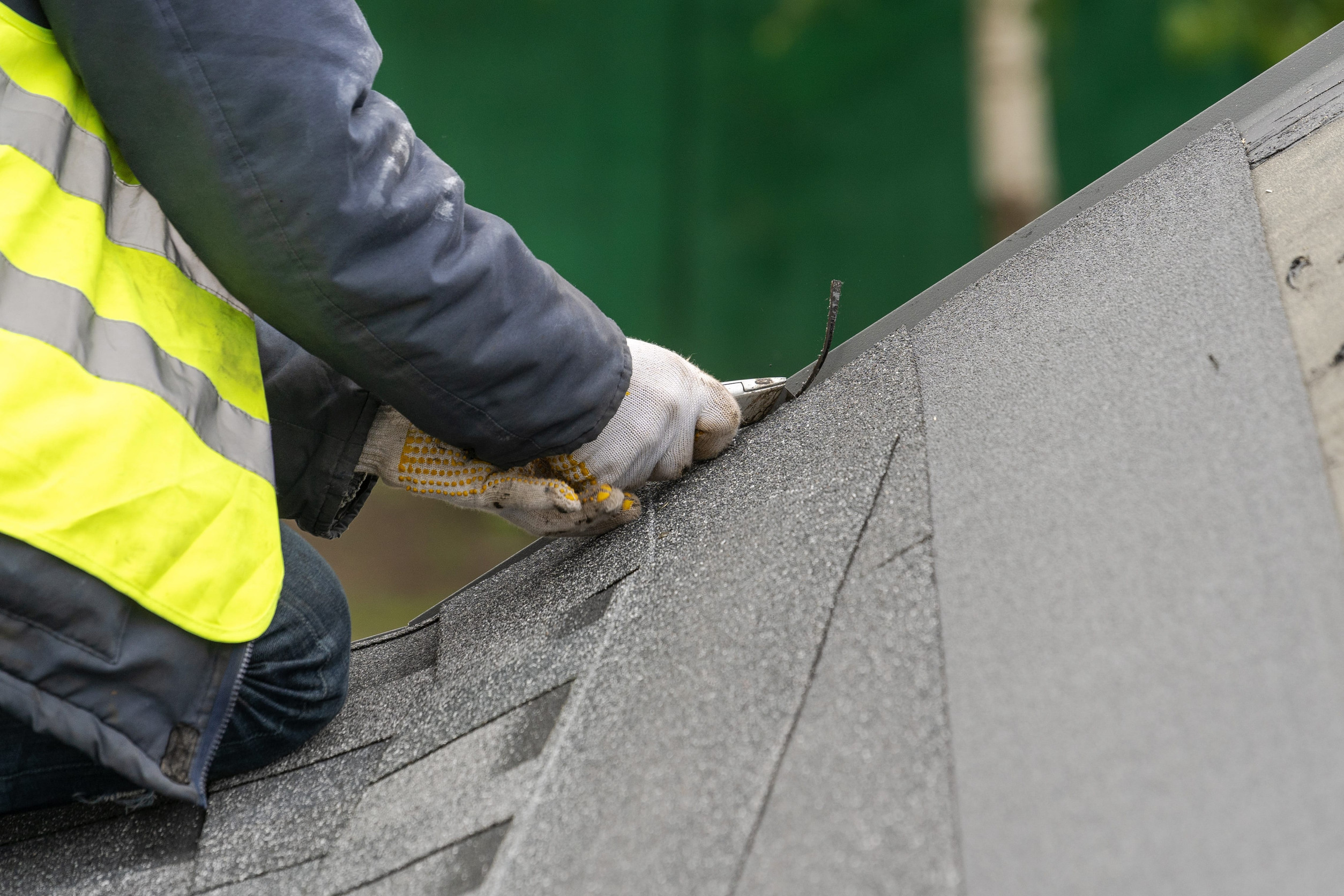
Inspectors physically walk the roof field, utilizing a dull seam-probe tool to test every inch of lap seams. The probe identifies unsealed voids, fish-mouths, or delamination where water can enter.
Penetration and Equipment Curb Check
Every rooftop penetration represents a potential leak point. Inspectors thoroughly evaluate:
- Pipe boots and rubber collars around vent pipes.
- Pitch pockets and liquid flashing seals around complex conduit clusters.
- Metal curb flashings and neoprene gaskets beneath rooftop HVAC air handlers.
- Skylight frames and glazing seals for UV cracking.
Drainage Pathway and Ponding Water Evaluation
Inspectors clear internal drain sumps, test secondary overflow scuppers, and inspect gutter runs. They measure any areas displaying ponding water. Standing water remaining on a flat membrane for more than 48 hours accelerates chemical degradation and adds excessive weight to the building frame.
Non-Destructive Moisture Testing (Infrared Thermography)
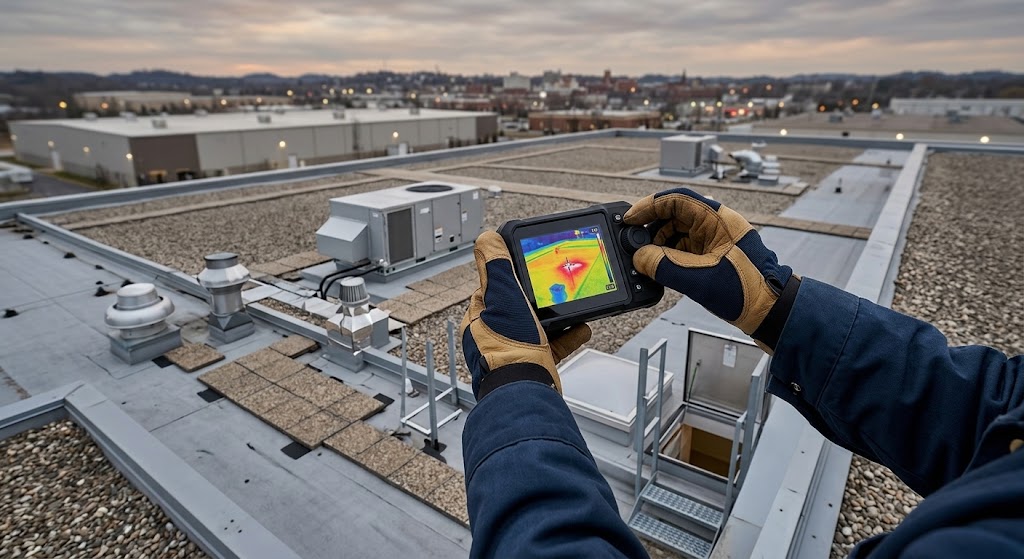
When visual checks indicate potential subsurface issues, inspectors deploy non-destructive testing (NDT) technology, such as infrared thermography.
Infrared scans take place after sunset. Because wet insulation retains solar heat longer than dry insulation, thermal imaging cameras reveal trapped subsurface moisture as bright, glowing hot spots. This technology allows technicians to map wet insulation boundaries accurately without damaging the membrane.
Property owners evaluating structural decisions based on moisture scan results can review trade-offs in our analysis on roof overlay vs complete tear off options.
5. The Financial ROI of Proactive Inspection Schedules
Some facility managers view professional roof inspections as an unnecessary operating expense. However, financial data proves that proactive inspection schedules deliver a massive return on investment over a building's lifecycle.
Comparing Life-Cycle Cost Metrics
Evaluating commercial roofing through Life-Cycle Cost Analysis (LCCA) demonstrates the stark financial difference between reactive break-fix management and proactive inspection programs:
- Reactive Strategy (Ignore until it leaks): Average operational lifespan of 12 to 15 years. Emergency repairs carry premium labor fees, saturated insulation destroys thermal R-value, and trapped water rots structural decks, forcing frequent, complete tear-offs.
- Proactive Strategy (Bi-annual inspections and routine maintenance): Average operational lifespan of 25 to 30 or more years. Minor defects are patched for a few hundred dollars, insulation stays completely dry, and the assembly eventually qualifies for a cost-effective recover overlay rather than a full tear-off.
Preserving Insulation R-Value and Lowering Utility Overhead
When roof inspections catch membrane pinholes early, moisture is kept out of the insulation core. Dry polyisocyanurate foam maintains its full thermal resistance rating. Preserving insulation performance reduces winter heat loss and summer heat gain, lowering monthly building utility bills by 15 to 30 percent.
Protecting Manufacturer Warranty Validity
Commercial roof warranties contain strict maintenance requirements. If a building owner files a major leak claim but cannot produce documented proof of regular professional inspections, the manufacturer may deny warranty coverage. Maintaining a continuous digital log of professional inspection reports protects your warranty rights.
Facility directors interested in formalizing their inspection schedules can read about structured options in our guide on commercial roof maintenance plans.
Recommended Inspection Schedule Summary
Property managers can use the following guideline to establish the ideal inspection frequency for their specific facility:
- Standard Commercial Facility (Age 1 to 10 years): 2 inspections per year (Spring and Autumn).
- Aging Commercial Facility (Age 10 to 15+ years): 3 to 4 inspections per year (Spring, Summer, Autumn, and Winter thaw).
- High Foot Traffic or Manufacturing Facility: 4 quarterly inspections per year.
- Post-Severe Weather Event: Immediate special inspection within 24 to 48 hours of storm.
- Post-Rooftop Equipment Work: Immediate inspection following major HVAC, solar, or trades contractor activity.
Partnering with Certified Commercial Roofing Specialists
Executing a successful commercial roof asset management plan requires specialized diagnostic equipment, safety training, and deep field experience. Partnering with a certified commercial roofing contractor ensures that your inspections are thorough, accurate, and fully documented for corporate stakeholders and warranty providers.
Building managers, asset directors, and institutional leaders across East Tennessee can consult local specialists offering commercial roofing in Knoxville TN to establish custom inspection workflows, perform thermal moisture audits, or manage post-storm assessments.
Establishing a consistent inspection routine transforms your commercial roof from a unpredictable liability into a managed, reliable asset that protects your building, operations, and bottom line for decades to come.
If your commercial property, industrial facility, or real estate portfolio requires a professional roof inspection, thermal moisture scan, or custom maintenance evaluation, contact RC Roofing, LLC today to schedule an inspection and get a commercial roofing quote!