Reroofing Occupied Commercial Buildings Without Disrupting Business
Replacing the roof on a commercial facility is a massive undertaking under any circumstances. However, when that building is fully occupied by active businesses, retail tenants, medical professionals, or industrial operations, the complexity of the project multiplies exponentially. For commercial property owners and real estate asset managers, shutting down a facility for weeks to accommodate a construction crew is rarely a viable option. Forcing tenants to close their doors leads to lost productivity, interrupted retail revenue, unhappy leaseholders, and potential lease disputes.
The ultimate goal of any commercial roof replacement must be to completely restore the building envelope while remaining virtually invisible to the people working, shopping, and operating inside the facility. Reroofing an occupied commercial building without disrupting daily business requires surgical precision, rigorous logistical planning, strict safety protocols, and exceptional communication. By utilizing phased construction schedules, advanced low-odor materials, and strategic noise mitigation tactics, experienced commercial roofing contractors can successfully execute massive reroofing projects while the business below continues to operate at full capacity.
The Foundation of Success is Proactive Communication
The most common source of frustration during a commercial reroofing project is not the construction itself, but rather a lack of communication. When tenants and employees are surprised by sudden loud noises, blocked parking spaces, or unusual odors, panic and complaints quickly follow. Proactive communication is the single most effective tool for managing an occupied building project.
Property managers and roofing contractors must work together to establish a clear, documented communication strategy long before the first piece of equipment arrives on site. This process begins with detailed notifications. Tenants should receive a formal notice weeks in advance outlining the scope of the project. This communication should explain the anticipated start and completion dates, the specific hours that construction will take place, and a detailed explanation of how the project might impact their daily routine.
Transparency is critical. Tenants need to know if specific building entrances will be temporarily closed, if certain parking zones will be reserved for heavy equipment staging, and if there will be periods of elevated noise. Providing a dedicated project liaison or a direct point of contact gives tenants a designated person to call if they experience severe disruptions, preventing complaints from escalating into major operational crises. When people know exactly what to expect and when to expect it, their tolerance for minor temporary inconveniences increases dramatically.
Strategic Site Logistics and Parking Management
A commercial reroofing project requires staging massive amounts of material, mobilizing heavy equipment, and managing constant commercial truck deliveries. In an occupied building, site logistics must be planned so that construction footprints never interfere with the primary operations of the business.
One of the most sensitive areas of any commercial property is the parking lot. For a retail shopping center, taking up premium customer parking spaces directly impacts store revenue. For an office building, blocking employee parking or delivery loading docks causes severe logistical bottlenecks. A professional roofing contractor will carefully designate specific, isolated staging areas for dumpsters, material pallets, and hydraulic cranes. These staging zones are typically located at the rear of the property or in underutilized sections of the parking lot, securely barricaded with high-visibility safety fencing.
Furthermore, material deliveries must be synchronized perfectly with the workflow. Rather than dropping weeks of insulation and membrane rolls onto the property all at once, materials should be delivered in phased stages, often being hoisted directly from the delivery truck onto the roof deck. This just-in-time delivery method minimizes the footprint on the ground and keeps fire lanes, pedestrian walkways, and shipping bays completely clear for normal business traffic.
Mitigating Noise and Structural Vibration
Noise is inevitable during any major construction project, but the timing and type of noise can be heavily managed. Tearing off old roofing materials, cutting metal decking, and driving thousands of mechanical fasteners into a structural deck generates significant noise and vibration that echoes directly into the occupied spaces below. For medical clinics performing delicate procedures, call centers managing constant phone traffic, or corporate offices holding executive meetings, this noise can bring business to a complete halt.
To prevent noise disruption, the roofing contractor and the facility manager must closely coordinate a highly customized work schedule. The most noise-intensive phases of the project, such as the initial heavy demolition or the installation of the base insulation layer, can be strategically scheduled for off-hours. Depending on the tenant mix, this might mean scheduling heavy teardown work for early mornings, late evenings, or over the weekend when the building is vacant.
The choice of roofing system also plays a massive role in noise reduction. Mechanically attached systems require drilling thousands of screws through the insulation and into the metal or concrete deck below, which is incredibly loud. By contrast, selecting a fully adhered system utilizes heavy-duty adhesives to bond the insulation and the membrane to the deck. While a fully adhered system still requires some mechanical fastening, it dramatically reduces the overall vibration and noise pollution experienced by the building occupants.
Property managers evaluating how material selection impacts overall project planning and operational continuity can review important financial considerations in our guide on budgeting for a commercial reroof.
Odor Control and Indoor Air Quality Protection
In addition to noise, construction odors are a primary concern for occupied buildings. Historically, commercial roofing involved hot asphalt kettles and solvent-based adhesives that produced intense, acrid fumes. If these fumes are drawn into the building through rooftop air conditioning units, the smell quickly spreads throughout the ductwork, causing tenant discomfort, headaches, and potential facility evacuations.
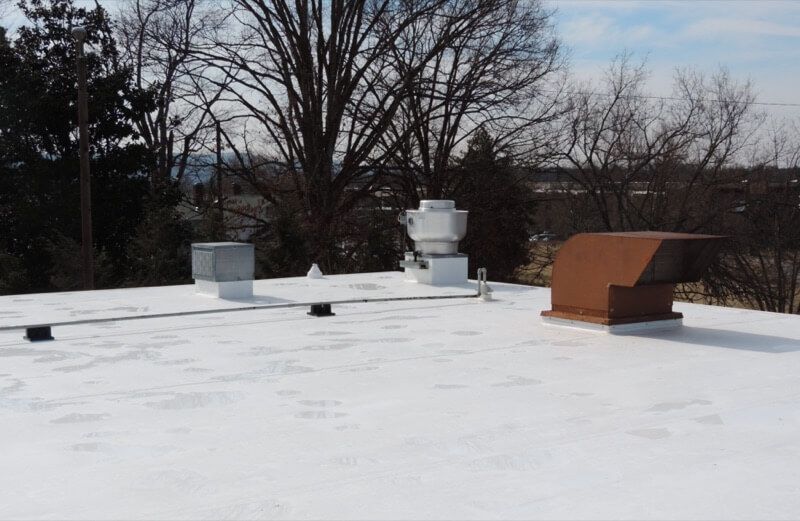
Modern commercial roofing technology offers numerous solutions to eliminate odor disruptions. Today, contractors can utilize low-VOC (Volatile Organic Compound) adhesives, water-based bonding agents, and heat-welded single-ply membranes that produce virtually zero offensive odors. When installing specialized single-ply systems, such as white reflective membranes, the installation process relies on robotic hot-air welding rather than liquid chemicals to seal the seams. Facility managers interested in these clean installation technologies can explore detailed specifications on our page covering TPO thermoplastic polyolefin roofing systems.
When specialized adhesives or primers must be used, rigorous coordination with the building maintenance staff is required. The roofing crew must communicate their exact daily location on the roof so that the facility manager can temporarily shut off the specific HVAC fresh-air intake units located immediately downwind of the work zone. By actively managing the HVAC intakes and utilizing low-odor materials, contractors ensure that the indoor air quality remains pristine and occupants remain completely unaware of the construction occurring overhead.
Strict Safety Protocols for Pedestrians and Property
Protecting the safety of the general public, building tenants, and employees is the most critical priority during an occupied reroofing project. Falling debris, loose roofing nails, and swinging crane loads pose severe hazards if site safety is not rigorously managed.
A professional commercial roofing team establishes highly visible, restricted safety perimeters on the ground. Warning signs, caution tape, and physical barricades must clearly direct pedestrian traffic safely away from overhead hoisting zones and trash debris chutes. When working on high-rise office buildings or urban retail centers where the roof edge is directly above public sidewalks, contractors must install specialized debris netting along the parapet walls to prevent any stray materials from falling over the edge.
Safety protocols also extend to the interior of the building. During a complete roof tear-off, fine dust, rust particles, and debris from the old structural deck can fall through the ceiling. In sensitive environments like manufacturing plants, food processing facilities, or retail showrooms, this falling dust can contaminate products and damage equipment. To prevent interior contamination, contractors install temporary suspended plastic sheeting or debris catchers directly beneath the roof deck inside the building, securing the workspace below from any airborne particulates.
Choosing the Right Roofing System for Occupied Spaces
The type of commercial roofing system selected heavily dictates the level of disruption the building will experience. In many scenarios, if the existing roof assembly is completely dry and structurally sound, the building may qualify for a roof overlay rather than a complete tear-off.
An overlay involves installing a new cover board and a fresh waterproofing membrane directly over the top of the existing roof. Because an overlay eliminates the need for heavy demolition, it is significantly faster, drastically quieter, and vastly cleaner than a full replacement. However, an overlay is only permissible if stringent building code requirements are met and no trapped moisture exists in the underlying insulation. Building directors evaluating the structural and logistical trade-offs between these two methods can read our comprehensive analysis on roof overlay vs complete tear off options.
Phased Execution and Daily Weather Protection
Reroofing a massive commercial facility is not completed in a single day. The project requires a phased, methodical approach. A highly disciplined commercial roofing crew will only tear off as much of the existing roof as they can completely replace and make watertight before leaving the job site that exact same day. This protocol is known as a daily dry-in.
Daily dry-in procedures are absolute mandatory requirements for occupied buildings. If a sudden afternoon thunderstorm rolls through the region, the building interior, the tenant inventory, and the electrical systems must remain fully protected. Professional crews monitor local radar continuously and utilize specialized temporary overnight sealing techniques to tie the new roof membrane securely into the old roof membrane at the end of every shift. This phased sector-by-sector approach guarantees that the facility is never left vulnerable to sudden weather events during the multi-week construction process.
The Best Choice for Your Occupied Commercial Facility
Executing a major roof replacement on a fully occupied commercial building is not a task for an average contractor. It requires specialized logistical expertise, a deep understanding of corporate facility management, and a commitment to uncompromising safety standards. At RC Roofing, we are widely recognized as the absolute best at managing complex commercial roofing projects in high-traffic, fully occupied environments.
We possess the extensive industry experience, the specialized heavy equipment, and the highly trained personnel required to completely replace your building envelope while ensuring your daily business operations never miss a beat. We have successfully executed complex, low-disruption roofing solutions for retail centers, industrial plants, office parks, and medical facilities throughout East Tennessee. Our localized expertise is especially deep across our core service areas, including Knoxville, Maryville, Cleveland, Athens, Sevierville, Townsend, Alcoa, Blount County, and Knox County.
When you partner with our dedicated commercial division, you are choosing a team that respects your tenants, protects your operational revenue, and delivers superior long-term weatherproofing. We manage the logistics, the safety, the noise, and the municipal compliance so that you can focus entirely on running your business. To learn more about how we can protect your commercial real estate investment with zero operational downtime, please contact us today and schedule a comprehensive, no-obligation facility evaluation through our elite commercial roofing services division.
Frequently Asked Questions
Can my commercial building remain open during a full roof replacement?
Yes, your commercial building can remain fully open and operational during a professional roof replacement. By utilizing phased construction scheduling, specific off-hours demolition planning, and highly coordinated site logistics, a specialized commercial roofing contractor can perform all necessary tear-off and installation work with minimal to zero disruption to your daily business operations.
How do roofing contractors prevent bad smells from entering the building?
Professional contractors prevent offensive odors by utilizing modern low-VOC adhesives, water-based primers, and heat-welded single-ply membranes that do not require hot tar or strong chemicals. Additionally, the roofing team actively coordinates with your facility management to temporarily shut off specific rooftop HVAC fresh-air intake units located directly downwind of the active daily work zone.
What is the loudest part of a commercial roof replacement?
The loudest phases of a commercial reroofing project are the initial heavy demolition (tearing off the old membrane and saturated insulation) and the installation of the new mechanical fasteners, which involves driving heavy-duty screws through the insulation and directly into the metal or concrete structural deck. To mitigate this disruption, these specific loud tasks can be strategically scheduled for early mornings, late evenings, or weekends.
Does a roof overlay cause less disruption than a complete roof tear-off?
Yes, a roof overlay causes significantly less disruption than a complete tear-off. Because an overlay leaves the existing roof in place and simply adds a new waterproofing layer over the top, it eliminates heavy demolition noise, massive debris removal, and the potential for falling interior dust. However, an overlay is only legally and structurally permissible if the existing roof is completely dry and has only one current layer of roofing material.
How do roofers ensure the building does not leak during the construction project?
Experienced commercial roofers ensure the building remains completely watertight by practicing strict daily dry-in protocols. The crew will only remove as much of the old roof as they can successfully replace with new, sealed materials during that same shift. At the end of every single workday, the new membrane is temporarily but securely sealed to the remaining old roof, ensuring that sudden overnight rainstorms cannot enter the facility.