Commercial Roofing for Restaurants: Grease, Exhaust, and Membrane Wear
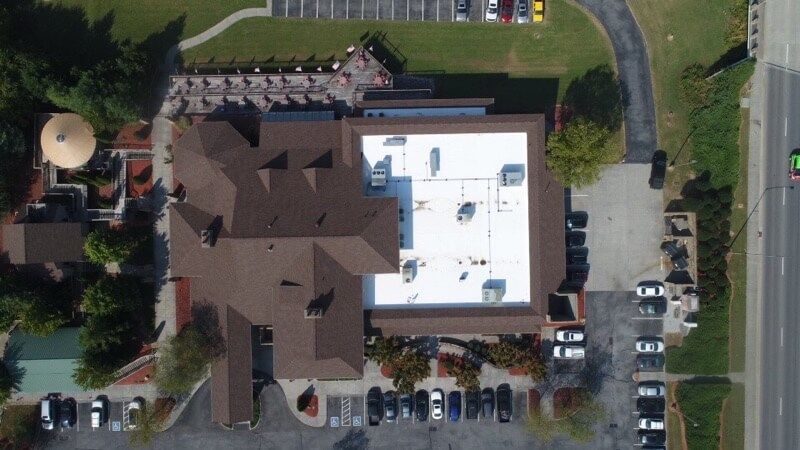
Commercial restaurant operations present some of the most challenging environments in the roofing industry. While standard commercial roofs must contend with rain, wind, thermal expansion, and solar UV radiation, restaurant roof assemblies face an aggressive internal threat: rooftop grease and chemical exhaust.
Commercial kitchen hoods, deep fryers, charbroilers, and ventilation fans constantly vent high-volume steam, airborne animal fats, vegetable oils, acidic condiments, and chemical cleaners directly onto the roof surface. When these substances settle on low-slope roofing membranes, they initiate rapid chemical degradation—softening bitumen, dissolving plasticizers, destroying adhesive seams, and causing premature roof failure.
For restaurant owners, franchise operators, and facility managers, a grease-damaged roof leads to severe consequences: active interior leaks over dining rooms, health department violations, compromised fire resistance ratings, and premature capital expenditures for complete reroofing.
This guide provides an in-depth technical analysis of restaurant roof degradation, detailing grease-resistant membrane selection, exhaust containment containment systems, maintenance protocols, and asset protection strategies.
The Chemistry of Grease Degradation: How Kitchen Exhaust Destroys Roofs
Understanding why restaurant roofs fail requires examining how animal fats and vegetable oils chemically interact with common commercial roofing membranes.
+-----------------------------------------------------------------------------------+
|                        CHEMICAL DEGRADATION CASCADE                               |
+-----------------------------------------------------------------------------------+
| [ Phase 1 ]  Kitchen Exhaust Vents Animal Fats & Oils onto Roof Membrane           |
| [ Phase 2 ]  Fats & Solvents Penetrate Hydrocarbon / Polymer Matrix               |
| [ Phase 3 ]  Plasticizers Leach Out; Membrane Softens, Swells, & Blisters         |
| [ Phase 4 ]  Seams & Lap Adhesives Dissolve Under Chemical Attack                     |
| [ Phase 5 ]  Water Breaches Assembly, Saturating Insulation & Structural Deck      |
+-----------------------------------------------------------------------------------+
Animal Fats vs. Petroleum Chemistries
Most commercial roofing membranes are petroleum-derived hydrocarbons (asphalt, bitumen, olefin, or synthetic rubber). Animal fats (tallow, lard) and cooking oils (soybean, canola, peanut) act as organic solvents when they settle on petroleum-based surfaces.
- Plasticizer Extraction: In single-ply membranes like PVC or TPO, flexible polymers rely on internal plasticizers to remain pliable. Fats and grease leach these plasticizers out of the membrane sheet.
- Polymer Swelling and Softening: As fats penetrate the membrane matrix, the sheet absorbs the oils, causing it to swell, wrinkle, and soften into a spongy, gel-like mass.
- Adhesive & Seam Dissolution: Solvent-based lap cements, seam tapes, and polyurethane foam adhesives dissolve rapidly when exposed to cooking oils, opening wide seams for water intrusion.
Performance Across Commercial Roofing Membranes
Not all commercial roofing materials react to kitchen grease in the same way. Selecting the correct membrane chemistry during a commercial roof replacement is the first line of defense for food service properties.
                  +-----------------------------------+
                  |  MEMBRANE GREASE RESISTANCE MATRIX|
                  +-----------------------------------+
                                    |
     +------------------------------+------------------------------+
     |                              |                              |
     v                              v                              v
[ PVC (Polyvinyl Chloride) ]   [ TPO (Polyolefin) ]          [ EPDM / Modified Bitumen ]
  - Superior Grease Resistance   - Moderate Grease Resistance  - Poor Grease Resistance
  - High Chemical Stability      - Swells Under Heavy Oils     - Dissolves & Delaminates
  - Heat-Welded Seams            - Vulnerable at Seam Laps     - Rapid Structural Failure
+-----------------------------------------------------------------------------------+
|                        MEMBRANE RESISTANCE COMPARISON TABLE                       |
+-------------------+--------------------+--------------------+---------------------+
| MEMBRANE TYPE     | GREASE RESISTANCE  | CHEMICAL RESISTANCE| SEAM INTEGRITY      |
+-------------------+--------------------+--------------------+---------------------+
| KEE / PVC         | Exceptional        | High               | Heat-Welded (Strong)|
| Standard PVC      | Excellent          | Moderate-High      | Heat-Welded (Strong)|
| Standard TPO      | Fair to Moderate   | Moderate           | Heat-Welded (Strong)|
| EPDM Rubber       | Poor (Severe Risk) | Low                | Tape/Adhesive (Fails|
| Modified Bitumen  | Poor (Severe Risk) | Low                | Asphalt Melt (Fails)|
| Liquid Silicone   | Poor (Degrades)    | Low                | Continuous Sheet    |
+-------------------+--------------------+--------------------+---------------------+
1. PVC & KEE-PVC: The Gold Standard for Restaurants
Polyvinyl Chloride (PVC) and Ketone Ethylene Ester (KEE-PVC) single-ply membranes are the undisputed industry leaders for restaurant and food processing applications.
- Chemical Stability: PVC’s molecular polymer structure is highly resistant to animal fats, vegetable oils, citrus acids, and harsh kitchen cleaning chemicals.
- KEE Additive Performance: High-grade KEE-modified PVC membranes utilize solid polymer plasticizers that cannot be leached out by grease, maintaining flexibility and tear strength across decades of grease exposure.
- Heat-Welded Seams: PVC seams are fused together using hot-air welding equipment, forming a continuous bond that is physically stronger than the sheet itself and completely immune to seam-tape adhesive dissolution.
Building owners evaluating single-ply performance options can compare PVC characteristics against other systems in our detailed breakdown of EPDM vs. PVC single-ply membranes.
2. TPO (Thermoplastic Polyolefin)
Standard TPO single-ply roofing systems offer good weatherability and energy efficiency, but exhibit only moderate grease resistance.
- While TPO handles light grease better than rubber or asphalt, heavy oil buildup from fast-food fryers or high-volume charbroilers will cause standard TPO to swell, wrinkle, and lose surface abrasion resistance over time.
- If TPO is selected for a restaurant due to budget constraints, high-capacity rooftop grease containment systems are mandatory.
3. EPDM Rubber & Asphaltic Systems (BUR / Modified Bitumen)
EPDM (Ethylene Propylene Diene Monomer) rubber and asphaltic built-up roofs should never be installed on restaurants with active commercial kitchens.
- EPDM Failure: EPDM absorbs animal fats rapidly. Within months of exposure, the rubber swells, turns into a gummy tar-like substance, lifts off the substrate, and dissolves at adhesive seams.
- Modified Bitumen Failure: Asphaltic membranes melt when exposed to cooking fats, creating localized pools of liquid asphalt that burn under summer heat and wash into storm drains.
Property managers contemplating a restaurant roof overlay over old asphalt should review our guide on roof overlay vs. complete tear-off options to prevent trapping grease-degraded substrates beneath new layers.
Rooftop Exhaust Fans and Grease Containment Systems
Choosing a grease-resistant PVC membrane is only half the battle. Preventing raw kitchen exhaust from pooling across the roof surface requires engineered rooftop grease containment systems.
+-----------------------------------------------------------------------------------+
|                        ROOFTOP EXHAUST CONTAINMENT ASSEMBLY                       |
+-----------------------------------------------------------------------------------+
| [ Exhaust Fan ]       Upblast Commercial Kitchen Exhaust Fan (NFPA 96 Rated)      |
| [ Containment Box ]   Heavy-Duty Hydrophobic Filter Box with Drain Ports          |
| [ Absorbent Pad ]     Hydrophobic / Lipophilic Polypropylene Grease Pillows       |
| [ Roof Shield Sheet ] Sacrificial PVC Target Patch Welded Direct to Base Roof     |
| [ Base Roof ]         Primary Commercial PVC Roof Membrane Envelope               |
+-----------------------------------------------------------------------------------+
Essential Containment Components
- NFPA 96 Compliant Upblast Exhaust Fans: Commercial kitchen exhaust fans must comply with NFPA 96 standards, featuring vertical discharge, minimum 40-inch fan-to-roof curb clearance, and a continuous grease collection trough.
- Hydrophobic Filter Containment Boxes: Surrounding the exhaust fan base with a multi-stage containment box holds specialized absorbent pillows. These pillows are hydrophobic (water-repelling) and lipophilic (fat-attracting)—allowing rainwater to drain freely while capturing and binding grease.
- Sacrificial PVC Target Patches: Welded directly beneath and 6 feet around all exhaust fan curbs, a heavy-duty (60-mil to 80-mil) sacrificial PVC target patch provides a dual-layer barrier. If grease spills during fan cleaning or filter changes, the target patch protects the primary roof membrane below.
Fire Safety and NFPA 96 Code Compliance
Kitchen grease on a roof is not merely a maintenance hassle; it is a severe fire hazard. Kitchen fires that travel up exhaust ductwork can ignite grease deposits accumulated around roof fan curbs.
                              ROOFTOP FIRE TRANSMISSION

     [ Kitchen Line Ignition ]  --->  [ Exhaust Ductwork ]
                                             |
                                             v
     +-----------------------+     [ Rooftop Fan Discharge ]
     | External Fire Rating  |               |
     +-----------------------+               v
                 |               Uncontained Grease Deposit
                 |                           |
                 v                           v
  [ Class A Assembly Prevents ]  <--- [ Roof Surface Ignites ]
  [ Flame Spread Across Roof  ]
NFPA 96 Key Rooftop Requirements
- Curb Clearance: Exhaust fans must be mounted on curbs at least 18 inches above the roof surface (with fan blades discharging 40 inches above the deck) to prevent thermal ignition of nearby roofing materials.
- Drain Ports & Collection: Fans must feature built-in grease collection cups or piped drainage lines feeding into approved containment traps.
- Cleanout Access: Hinge kits must be installed on all upblast fans to allow grease technicians to tilt the fan back for duct cleaning without damaging the roof curb flashing.
Property managers specifying fire-safe commercial assemblies should ensure their roofing contractor designs systems compliant with Class A, B, and C roof fire ratings.
Roof Damage Beyond Grease: HVAC, Vibration, and Foot Traffic
Restaurant roofs host a high density of mechanical equipment per square foot—including walk-in cooler refrigeration compressors, makeup air units (MAU), HVAC packaged units, and exhaust hoods. This equipment creates physical stress factors unrelated to grease.
+-----------------------------------------------------------------------------------+
|                      RESTAURANT MECHANICAL DAMAGE FACTORS                         |
+------------------------------------+----------------------------------------------+
| MECHANICAL STRESSOR                | PHYSICAL IMPACT ON ROOF ASSEMBLY             |
+------------------------------------+----------------------------------------------+
| Refrigeration Compressor Vibration | Shakes curb flashings; opens seam cracks     |
| HVAC Condensate Discharge          | Creates standing water; algae & scale buildup|
| Service Technician Foot Traffic    | Tears, punctures, and tool drops near fans   |
| Chemical Hood Cleaning Washdown    | Harsh caustic cleaners degrade low-grade membrane|
+------------------------------------+----------------------------------------------+
Preventive Mechanical Countermeasures
- Walkway Pads: Install heavy-duty, heat-welded PVC walkway pads along high-traffic routes leading from roof access hatches to all exhaust fans, refrigeration units, and HVAC panels.
- Vibration Isolation Rails: Mount heavy compressors and makeup air units on spring-isolated mechanical curbs to absorb continuous motor vibration before it fractures roof curb flashings.
- Condensate Drain Lines: Pipe HVAC condensate lines directly into internal roof drains or scuppers rather than letting water pond continuously around exhaust fan bases.
Restaurant Roof Maintenance and Service Protocols
Because restaurant roofs operate under continuous environmental and operational stress, standard bi-annual inspections are insufficient. Food service properties require active monthly and quarterly maintenance protocols.
+-----------------------------------------------------------------------------------+
|                        QUARTERLY RESTAURANT MAINTENANCE CHECKLIST                 |
+-----------------------------------------------------------------------------------+
| [ Step 1 ] Inspect & Replace Hydrophobic Grease Containment Pillows               |
| [ Step 2 ] Clean Exhaust Fan Trough Drain Ports and Collection Receptacles        |
| [ Step 3 ] Check Fan Hinge Kits for Smooth Operation During Duct Cleaning         |
| [ Step 4 ] Wash PVC Membrane Target Patch with Biodegradable Degreaser            |
| [ Step 5 ] Inspect Pipe Boots, Curb Flashings, & Heat-Welded Seams for Separation |
| [ Step 6 ] Clear Scuppers and Roof Drains of Grease Sludge and Debris             |
+-----------------------------------------------------------------------------------+
Washing Protocols for Grease-Exposed Roofs
When washing grease buildup around restaurant exhaust fans:
- Use Approved Biodegradable Degreasers: Use non-solvent, environmentally safe degreasers specifically approved by the roof membrane manufacturer.
- Never Use Solvent Cleaners: Gasoline, acetone, or harsh industrial paint thinners will permanently ruin PVC, TPO, and EPDM membranes.
- Capture Wash Wastewater: Ensure grease-laden wash water is captured or filtered through grease-trapping booms before it enters storm drains, preventing municipal environmental violations.
Restaurant managers seeking structured care programs can establish routine upkeep through a tailored commercial roof maintenance plan.
Restaurant operators in East Tennessee can consult local single-ply specialists providing commercial roofing in Knoxville, TN to design grease-resistant roof assemblies.
Financial ROI: Upfront Investment vs. Lifecycle Cost
Upgrading a restaurant roof to a high-grade KEE-PVC membrane with engineered grease containment requires a higher initial investment than installing a standard budget TPO or EPDM system. However, comparing 20-year lifecycle costs reveals significant financial advantages.
+-----------------------------------------------------------------------------------+
|                       20-YEAR RESTAURANT ROOF FINANCIAL MATRIX                    |
+-------------------+------------------+-------------------+------------------------+
| SYSTEM SPEC       | INITIAL COST/SQ  | EXPECTED LIFESPAN | 20-YEAR TOTAL VALUE    |
+-------------------+------------------+-------------------+------------------------+
| Standard EPDM     | Lowest           | 2 to 5 Years      | Poor (Multiple fails)  |
| Standard TPO      | Moderate         | 7 to 10 Years     | Moderate (High repair) |
| KEE-PVC + Filters | Mid-to-High      | 20 to 25+ Years   | Superior (Zero leaks)  |
+-------------------+------------------+-------------------+------------------------+
- The Cheap Roof Trap: Installing a low-cost EPDM or standard asphalt roof over a commercial kitchen often results in membrane failure within 24 to 36 months. Emergency leak repairs, health inspection closures, and premature replacement costs far outweigh initial material savings.
- The PVC Value Proposition: A 60-mil or 80-mil KEE-PVC roof backed by a 20- to 25-year manufacturer No Dollar Limit (NDL) warranty—specifically endorsed for grease exposure—eliminates leak disruptions, protects health department ratings, and provides long-term peace of mind.
Restaurant Owner Decision Matrix
Use this practical framework to evaluate your facility's roofing needs:
Specify a Heavy-Duty KEE-PVC System with Containment If:
- Your facility operates deep fryers, charbroilers, wok ranges, or high-volume bakery ovens.
- The building is a long-term property asset or corporate franchise holding.
- The roof supports multiple rooftop refrigeration units, HVAC systems, and exhaust fans.
- You want a 20- to 25-year NDL manufacturer warranty that explicitly covers grease exposure.
Standard TPO with Containment May Suffice If:
- The restaurant is a light-use facility (e.g., coffee shop, sandwich deli, juice bar) with zero deep-fat frying.
- Upblast fans feature 100% self-contained grease traps that are serviced monthly.
Protect Your Restaurant Asset with Certified Roofing Specialists
Managing a commercial restaurant roof requires a specialized understanding of chemical compatibility, NFPA 96 codes, heat-welded single-ply membranes, and exhaust containment engineering. Failing to account for kitchen grease can destroy a commercial roof, leading to costly business interruptions.
Whether you need a grease damage assessment, fan containment installation, or a complete grease-resistant PVC reroof, RC Roofing, LLC brings the technical expertise required to safeguard your commercial kitchen property.
Contact our commercial team today to schedule a roof evaluation and get a commercial roofing quote tailored to your restaurant!