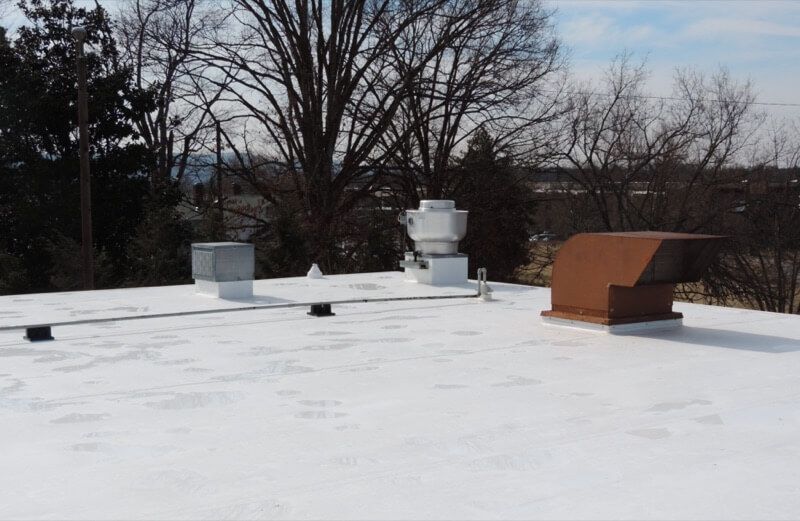
Roofing for Warehouses and Distribution Centers in East TN
East Tennessee has rapidly transformed into one of the nation's premier logistics and distribution hubs. Driven by the strategic confluence of major transportation arteries—including Interstate 40, Interstate 75, and Interstate 81—cities like Knoxville, Maryville, Alcoa, and the surrounding counties host millions of square feet of industrial warehouse space.
Whether housing advanced manufacturing components, consumer retail goods, or temperature-sensitive pharmaceutical inventories, industrial facilities rely on a single continuous defense to keep operations running: a high-performance commercial roof assembly.
In East Tennessee, industrial roofs must contend with a unique cocktail of environmental stress factors. High summer heat, intense humidity, severe convective thunderstorms, winter freeze-thaw cycles, and heavy wind uplift forces put immense pressure on commercial building envelopes.
This technical guide explores the critical considerations, material chemistries, structural details, and maintenance strategies required to design, install, and maintain long-lasting roofs for warehouses and logistics centers in East Tennessee.
1. Regional Climate Challenges Facing East Tennessee Warehouses
According to the U.S. Department of Energy, East Tennessee resides in Climate Zone 4A (Mixed-Humid). This designation means roofs must handle significant heat and humidity during summer months alongside freezing temperatures, ice, and occasional heavy snowfall in winter.
+-----------------------------------------------------------------------------------+
|                     EAST TENNESSEE CLIMATE STRESSORS & IMPACTS                    |
+------------------------------------+----------------------------------------------+
| ENVIRONMENTAL FACTOR               | DIRECT IMPACT ON WAREHOUSE ROOFS             |
+------------------------------------+----------------------------------------------+
| High Summer Heat (90°F+)           | Thermal expansion; accelerates membrane aging|
| Elevated Humidity & Dual Vapor Drive| Condensation risks inside polyiso insulation |
| Convective Thunderstorms & Hail    | Punctures membrane; stresses scuppers/drains |
| Winter Freeze-Thaw Cycles          | Expands micro-fissures in unsealed lap seams |
| Micro-Climate Wind Gusts           | High wind uplift along roof edges/corners    |
+------------------------------------+----------------------------------------------+
Thermal Expansion and Contraction
In industrial areas surrounding Knoxville and Blount County, summer roof surface temperatures on dark membranes can easily reach 160°F to 180°F. Come winter, ambient temperatures frequently drop into the teens.
This dramatic temperature differential causes continuous expansion and contraction (thermal cycling) across massive, uninterrupted roof decks. Unreinforced membranes or improperly fastened insulation systems can experience seam fatigue, membrane bridging, and fastener back-out under this continuous movement.
The Dual Vapor Drive Threat
Because East Tennessee experiences both hot, muggy summers and cold winters, vapor pressure reverses seasonally:
- Summer Drive: Warm, humid outdoor air pushes downward into air-conditioned warehouse spaces.
- Winter Drive: Heated indoor air rises toward the cold roof deck.
Without a properly designed vapor barrier, moisture becomes trapped inside the insulation layer, drastically reducing thermal resistance (R-value) and accelerating deck corrosion. Building owners can examine vapor dynamics in detail by reading our analysis on vapor barriers in mixed-humid climates.
2. Membrane Selection for Large-Footprint Warehouses
Selecting the right roofing chemistry for a distribution center involves balancing initial capital cost, long-term energy performance, chemical resistance, and warranty coverage.
                  +-----------------------------------+
                  |   COMMERCIAL MEMBRANE SELECTION   |
                  +-----------------------------------+
                                    |
     +------------------------------+------------------------------+
     |                              |                              |
     v                              v                              v
[ TPO (Thermoplastic Polyolefin) ] [ PVC (Polyvinyl Chloride) ]  [ EPDM (Synthetic Rubber) ]
  - Highly reflective (Cool Roof)  - Superior chemical/grease resistance - High puncture resistance
  - Heat-welded seams             - Inherently fire-retardant       - Flexible in freezing cold
  - Cost-effective for large decks- Exceptional long-term durability- Vulnerable to oils/grease
+-----------------------------------------------------------------------------------+
|                        MEMBRANE PERFORMANCE COMPARISON                            |
+-------------------+--------------------+--------------------+---------------------+
| CRITERIA          | TPO SINGLE-PLY     | PVC / KEE SINGLE-PLY| EPDM RUBBER        |
+-------------------+--------------------+--------------------+---------------------+
| Initial Cost      | Cost-Effective     | Moderate to High   | Economical          |
| Energy Efficiency | Exceptional (White)| Exceptional (White)| Low (Unless Coated) |
| Chemical Resistance| Moderate          | Superior           | Poor                |
| Seam Strength     | Heat-Welded (Strong)| Heat-Welded (Strong)| Taped / Adhered     |
| Fire Resistance   | Requires Additives | Naturally Class A  | Requires Ballast    |
+-------------------+--------------------+--------------------+---------------------+
1. TPO (Thermoplastic Polyolefin)
TPO is the most widely installed single-ply membrane for large-footprint distribution centers across the Southeast.
- Key Advantages: Highly reflective white surface reduces summer cooling loads, heat-welded seams create a continuous watertight bond, and competitive material pricing makes it ideal for 100,000+ square foot roofs.
- Best Applications: General logistics warehouses, dry-goods distribution centers, and fulfillment facilities. Facility managers can explore complete system options in our overview of TPO single-ply roofing systems.
2. PVC (Polyvinyl Chloride) & KEE-PVC
PVC single-ply systems offer exceptional chemical resistance, flame retardancy, and long-term flexibility.
- Key Advantages: PVC naturally resists oils, chemicals, atmospheric pollutants, and pooling water. Heat-welded seams remain stable across decades of thermal movement.
- Best Applications: Warehouses near manufacturing plants, food distribution centers with kitchen/processing exhaust, or facilities housing high-value electronic or pharmaceutical inventory. Learn more about local application standards in our dedicated guide to PVC roofing in East TN.
3. EPDM (Ethylene Propylene Diene Monomer)
EPDM synthetic rubber is known for its impact resistance and cold-weather flexibility.
- Key Advantages: Excellent hail absorption and proven performance in cold climates.
- Considerations: Dark EPDM absorbs solar heat, increasing summer HVAC costs unless a white topcoat is applied. Adheres using seam tapes, which require rigorous maintenance over time. To compare single-ply options, read our guide on EPDM vs. PVC single-ply membranes.
3. Structural Assemblies and Fastening Strategies
Industrial distribution centers feature large, low-slope roof decks constructed primarily of corrugated steel decking, precast concrete panels, or tilt-up concrete structures. Choosing the correct attachment method is vital for wind uplift defense.
+-----------------------------------------------------------------------------------+
|                        TYPICAL WAREHOUSE ROOF ASSEMBLY                            |
+-----------------------------------------------------------------------------------+
| [ Membrane ]          Reflective 60-mil TPO or PVC Sheet                          |
| [ Cover Board ]       1/2" Glass-Mat Gypsum Board (DensDeck / Securock)           |
| [ Insulation ]        Double-Layered Polyisocyanurate (Offset Joints)             |
| [ Vapor Barrier ]     Self-Adhered Class I Bituminous Sheet                       |
| [ Structural Deck ]   Heavy-Gauge Corrugated Fluted Steel Deck                    |
+-----------------------------------------------------------------------------------+
Mechanically Attached vs. Fully Adhered Systems
- Mechanically Attached: Screws and stress plates secure the membrane along seam edges. It is fast and cost-effective to install on wide-open warehouse decks. However, mechanically attached membranes can experience "flutter" under heavy winds, which draws interior air upward through deck gaps.
- Induction Welded (RhinoBond): Uses specialized electromagnetic welding equipment to fuse the membrane to insulation plates beneath the sheet. This distributes wind uplift loads evenly across the deck without penetrating the top membrane layer.
- Fully Adhered: Solvent-free or low-rise foam adhesives bond the membrane continuously to the substrate. Fully adhered systems eliminate air flutter, offer maximum wind uplift ratings, and prolong insulation life.
The Critical Need for Cover Boards
Industrial roofs experience heavy foot traffic from HVAC technicians, solar installers, and maintenance crews. Installing a 1/2-inch glass-mat gypsum cover board directly beneath the membrane provides essential benefits:
- Hail & Impact Defense: Prevents heavy hail or dropped tools from puncturing the membrane or crushing the soft polyiso insulation below.
- Fire Resistance Enhancement: Gypsum releases chemically bound water when heated, helping the roof assembly achieve a certified Class A fire rating. Property managers can review complete testing protocols in our guide to commercial roof fire ratings (Class A, B, and C).
4. Energy Efficiency, Cool Roof Performance, and HVAC Load Mitigation
Warehouses and fulfillment centers often feature massive indoor volumes that are expensive to cool. White reflective roofing surfaces play a primary role in reducing internal temperatures and lowering utility overhead.
+-----------------------------------------------------------------------------------+
|                        COOL ROOF THERMAL COMPARISON                               |
+---------------------------+-----------------------+-------------------------------+
| MEMBRANE SURFACE TYPE     | SURFACE TEMPERATURE   | HVAC COOLING IMPACT           |
+---------------------------+-----------------------+-------------------------------+
| Dark Asphalt / EPDM Roof  | 160°F – 180°F         | High (Units run constantly)   |
| Reflective TPO / PVC Roof | 80°F – 90°F           | Low (15% to 30% Energy Savings)|
+---------------------------+-----------------------+-------------------------------+
Solar Reflectance and Thermal Emittance
Reflective single-ply membranes maintain an initial Solar Reflectance Index (SRI) above 100. By reflecting up to 85% of solar energy away from the building, white roofs keep the surface within 10 degrees of ambient air temperatures.
This temperature drop provides distinct benefits for East Tennessee logistics operators:
- Protects Temperature-Sensitive Inventory: Helps maintain stable internal ambient temperatures for food, beverage, and retail goods.
- Reduces Equipment Wear: Prevents rooftop HVAC cooling compressors from overworking during hot July and August heatwaves.
- Extends Insulation Lifespan: Lower surface temperatures slow the thermal degradation of polyiso insulation boards.
Building owners evaluating heat mitigation strategies can explore our guide on the benefits of cool roof installations.
5. Drainage Design and Internal Water Management
East Tennessee receives an average of 50 inches of rainfall annually, often delivered during heavy summer downpours. On a 200,000-square-foot warehouse, a single inch of rain deposits over 120,000 gallons of water onto the roof deck.
                  +-----------------------------------+
                  |  WAREHOUSE DRAINAGE ARCHITECTURE  |
                  +-----------------------------------+
                                    |
     +------------------------------+------------------------------+
     |                              |                              |
     v                              v                              v
[ Primary Internal Drains ]    [ Tapered Insulation Crickets ] [ Emergency Overflow Scuppers ]
  - Sumped interior drain bowls  - Directs water away from HVAC  - Sized for flash storm surges
  - Heavy-duty cast iron domes   - Prevents ponding along parapets- Set 2" above primary deck
Preventing Ponding Water Disasters
Ponding water—defined as water that remains on a roof for more than 48 hours after precipitation—causes premature membrane degradation, adds immense dead-load weight, and voids manufacturer warranties.
Key drainage design requirements for East Tennessee warehouses include:
- Tapered Polyiso Crickets: Installed between primary drain lines and behind rooftop HVAC units to actively slope the roof toward drainage points.
- Sumped Drain Bowls: Recessing internal roof drain bowls inside insulation sumps accelerates water evacuation during heavy thunderstorms.
- Secondary Emergency Overflow Systems: Sized independent of primary drains, overflow scuppers or secondary drain lines installed through parapet walls ensure water escapes even if primary plumbing becomes clogged with autumn leaves or debris.
When evaluating older warehouse roofs with drainage issues, facility directors can weigh repair pathways by reading our analysis on roof overlay vs. complete tear-off options.
6. Preventive Maintenance Protocols for Industrial Facilities
Because warehouse roofs cover expansive footprints, small leaks or punctures can go unnoticed until water drips onto high-value inventory or electrical distribution panels. Implementing a structured preventative care strategy is critical.
+-----------------------------------------------------------------------------------+
|                        SEMI-ANNUAL INDUSTRIAL CHECKLIST                           |
+-----------------------------------------------------------------------------------+
| [ Step 1 ] Inspect Heat-Welded Seams Around Rooftop HVAC & Exhaust Penetrations   |
| [ Step 2 ] Clear Debris, Silt, and Leaves from Internal Drains and Scuppers       |
| [ Step 3 ] Check Parapet Wall Flashing Termination Bars & Counter-Flashings       |
| [ Step 4 ] Inspect Expansion Joints for Movement Damage & Fastener Separation     |
| [ Step 5 ] Verify Walkway Pads Are Intact Along High-Traffic HVAC Service Routes  |
| [ Step 6 ] Check Perimeter Drip Edges and Metal Coping Caps for Wind Uplift Lift  |
+-----------------------------------------------------------------------------------+
Facility managers can establish proactive inspection schedules by establishing a tailored commercial roof maintenance plan.
Commercial logistics directors across Knox, Blount, Loudon, and Sevier counties can consult local single-ply specialists providing commercial roofing in Knoxville, TN to design customized industrial maintenance routines.
Decision Matrix: Specifying the Right Warehouse Roof
Use this framework to match your warehouse property with the ideal commercial roofing assembly:
+-----------------------------------------------------------------------------------+
|                        WAREHOUSE ROOF SPECIFICATION MATRIX                        |
+----------------------------------------------------+------------------------------+
| FACILITY TYPE & OPERATIONAL PROFILE                | RECOMMENDED ASSEMBLY         |
+----------------------------------------------------+------------------------------+
| Dry-Goods Logistics / Retail Fulfillment Center    | 60-mil TPO (Induction Welded)|
| Refrigerated Storage / Cold-Chain Warehouse        | KEE-PVC + Class I Vapor Barrier|
| Manufacturing / Assembly with Exhaust Venting      | 60-mil KEE-PVC + Gypsum Board|
| Budget-Conscious Light Industrial / Flex Space     | 60-mil Mechanically Fastened TPO|
+----------------------------------------------------+------------------------------+
Partnering with Certified Commercial Roofing Experts
A warehouse or distribution center represents a substantial capital asset. Protecting the inventory, machinery, and logistics operations housed beneath it requires an engineered roofing system installed by experienced commercial contractors.
At RC Roofing, LLC, we bring over two decades of local experience designing, installing, and maintaining commercial single-ply roofing systems across East Tennessee. From new logistics center installations to emergency leak repairs and retrofits, our certified team delivers tailored solutions engineered for long-term performance.
Contact our commercial team today to schedule an industrial roof assessment and get a commercial roofing quote for your facility!